I was born and raised in the military. My father was deployed on an aircraft carrier off the coast of Okinawa when I was born at Tripler Army Hospital on the outskirts of Honolulu. This was during the Korean War. He served thirty years in the Navy, which means I grew up inside the military complex.
It is different to be raised in the military instead of being raised in the civilian world. As I write this, I see how I really can’t explain the difference because I do not have a reference to what it means to grow up outside of the military. Perhaps this is one of the reasons I thought of the playwriting project Military Family Staged Readings—to better understand the bridge between the two worlds.
There is also a difference between those who wear the uniform and those who wait for the return of the deployed. Each experiences the military in a different way, and hard as we try, there remains a gap of understanding, of experiences. My father was deployed many times—leaving on a big ship and returning six months or a year later. When he left I was one way, and when he returned I was a different person. We both changed during his deployment and it took time to reconnect and establish our relationship as father and daughter.
You may wonder why I begin this blog post about a child whose father deploys to a far away country and what that has to do with playwriting and the theater. Most people in our society do not understand what it means to be a spouse, child, mother or father of those who wear the uniform.

Since 2010, I have worked with Veterans helping them tell their stories through poetry, prose, and playwriting through the organization Returning Soldiers Speak. As rewarding and meaningful and important as this work has been, I yearned to do something different. I wanted to honor the family members of the military.
I guess you could say that I wanted to honor my mother who was a military wife for thirty years. And my sisters who moved from place to place with each new set of orders. And that little girl who waited for her father’s return. So, I wrote a proposal of a playwriting project for Veterans and family members—playwriting workshops that would culminate in a series of staged readings for the public—and submitted it to the City of Los Angeles Department of Cultural Affairs. We were awarded the grant (that is, a matching grant) and began the playwriting workshops last fall.
The interview process was challenging because each person was wonderful and full of potential and passion, but due to the constraints of our budget, we couldn’t accept all of them.
Our playwrights are Benjamin Fortier, a Marine Corps Veteran who was in Fallujah in 2006; Gregory Hillman, a Marine Corps Veteran who was deployed to Afghanistan; Jeffrey Webster, a Coast Guard Veteran who does ceremonies for Veterans in Hospice; Bryan Caldwell, a grandson of a Navy Captain; Denah Angel, a daughter whose father served in the Air Force during the Vietnam War; and Liisa Rose, a wife whose husband was an Air Force Colonel who served for almost twenty-nine years.
Some live in Los Angeles, others live in various parts of the country. The challenge has been how to bring all of us together—and so enter Zoom. It amazes me how intimate the workshops have been using this virtual platform.

One Saturday morning during our Zoom playwriting workshop, we were focusing on Liisa Rose’s play. Her play asks the question: Is the current state of the country worth giving one’s life for? This is a provocative question to ask at any time, but to ask this question during these turbulent times is daring, brave, and important.
Support and Defend is the title of Liisa’s play and the main character faces the challenges of grieving the death of her husband (a character who died while deployed to Afghanistan) and raising her two almost-adult children. Much of Liisa’s play draws upon her own experiences in the military (but thank goodness she and her husband are living happily in Arizona).
At one point in our conversation, Liisa began telling us about a very personal experience that happened when her husband returned home from yet another deployment. I asked her if she had written about that and she said no. I suggested she write a monologue for the main character. She did. And then she wrote a scene based on their experience. It is one of the most powerful things I have ever heard or read.
She debated whether the scene belonged in the play, and if it did, where in the play’s structure would the scene reveal what it needs to reveal? She also wondered what her husband would say if she told him that she wanted to write this scene. He told her that would be okay. And ultimately, we decided that the play needs it.
It has been my honor to work with Liisa; she is a good playwright and has written an important play. The question she poses about weighing the current state of one’s country drives the story forward, and invites us to look with new awareness and search for an answer. After each reading, the playwright and the audience will engage in dialogue. I am curious what shape the dialogue will take after hearing Support and Defend.

Our other wonderful female playwright is Denah Angel Shenkman. I know Denah from Ensemble Studio Theatre/LA where we have worked together for many projects—I as a playwright and Denah as an actor.
A while ago, Denah told me the story about the Greek side of her family. During World War Two, the family’s house was taken over by the Nazis and her two aunts had to fend for themselves. They eventually escaped and found their way to America and joined their father. Theirs was complicated journey and a fascinating journey. I knew this project would be an opportunity for Denah to begin writing about her ancestors.
In writing her play, Denah has drawn upon her family’s story, and at the same time embraced the creative process of letting the story and the characters define the play. She has known all along what story she wants to tell, and it has been exciting to watch her take the leap into an unknown place and find the elements and aspects of the characters and their journeys.
One of the first times (if not the first time) Denah, Jim Lunsford (our wonderful dramaturge) and I met, she said that she wanted to write a love story. She wanted to show the complexities of what it means to live during war and to discover love in that harsh and brutal world. She began with three characters, added another character, and then another character to deepen and strengthen the theme, conflict, story and plot. She has drawn upon her Greek heritage in subtle and not-so-subtle ways that add spice and flavor, history and authenticity to the play. How she weaves Greek mythology throughout the characters’ lives—their relationships and their dialogue—makes sense in this world of her creation, and invites us to envision what it means to live in a place rooted in mythology.
We might inquire: How does ancient mythology speak to me in the 21st century? What can I learn? How might I use myth to create myth? What can I learn from the historical context of the play that will serve me during these turbulent times? For me to ask such questions means the playwright has done the work and written a play of meaning and authenticity. I am excited to bear witness to the dialogue between the playwright and the audience after the reading of An Era.
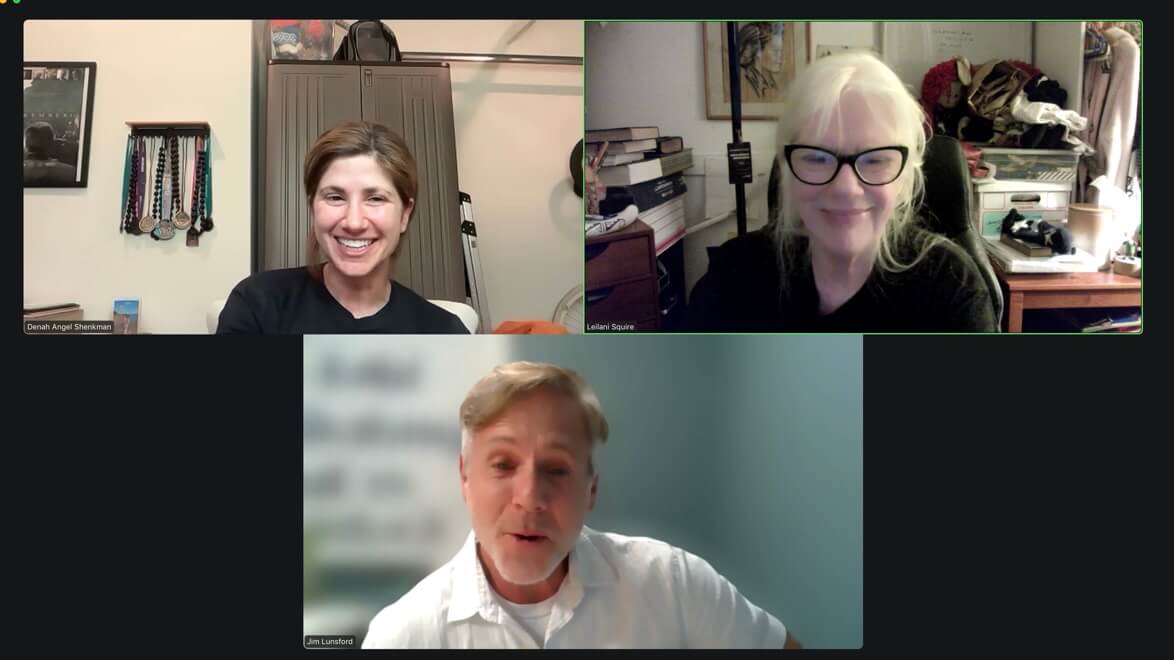
I must give a shout out to Jim Lunsford, our incredible dramaturge. I couldn’t have done this project without him. He understands theater in a way that I wish I did. He sees through to the essences of structure in a way that I wish I did. He envisions the whole picture, while I see the specifics—we make a wonderful team.
I am directing An Era and honored and excited to be doing so. Keith Szarabajka and Joe Garcia will direct readings as well.
The staged reading series begins with Denah Angel Shenkman’s An Era on March 25 and closes with Liisa Rose’s Support and Defend on April 29.

There are four other staged readings in the series that will also be awesome:
- April 1 – Gregory Hillman, Self-less
- April 8 – Benjamin Fortier, The Park
- April 15 – Jeffrey Webster, Killing to the Sound of Trumpets
- April 22 – Bryan Caldwell, Flowers From Hell
I hope you join us for these wonderful plays, engage in the dialogue after the reading,and enjoy the camaraderie of community.
Military Family Staged Readings take place March 25 – April 29, Wednesdays at 7:30pm, followed by dialogues between the playwrights and audiences. The readings take place at Sawyer’s Playhouse, 11031 Camarillo Street in North Hollywood, CA. Donations will be gratefully accepted. For more info, visit returningsoldiersspeak.org/military-family-staged-readings-project


