Category Archives: Women

World Premiere: A Subtle Kind of Murder

By Alison Minami

When others demand that we become the people they want us to be, they force us to destroy the person we really are.  It’s a subtle kind of murder.  —Jim Morrison

The play A Subtle Kind of Murder written by Dale Dunn had its world premiere at the New Mexico Actors Lab this past summer, and it has just been nominated for the Broadway World Awards in the categories of Best New Play, Best Director, Best Supporting Actor, Best Ensemble Acting, Best Scenic Design, Best Lighting Design, and Best Production! This achievement could not make me happier or be more inspiring for myself as a fellow playwright who offered feedback in the early stages of writing. I had the pleasure of being a part of Jennie Webb’s Next Draft Workshop with Dale back in 2021, reading early drafts of the script when the sinewy musculature hadn’t been fully realized and the thematic threads were not neatly tied. It is always satisfying to see a play come together after being a part of its developmental process. Dale knew clearly what she wanted to write about, but there was a lot of metaphor and symbolism within the overlapping worlds she was creating, especially tied to the multimedia aspect of her piece that needed shaping. What I remembered most about her play was that it was deeply feminist, and it spoke to the relentless sexism and abuse of young women who are trying to make something of themselves professionally. While I did not get to see the production, I reached out to Dale to read the latest production copy of the play. I’ve now just read it, and all I can say is that it leaves a reader breathless! I can only imagine what it was like to have a seat in the darkened theater. Five years in the making, and the final script is simultaneously heartbreaking, gut-punching and, dare I say, hopeful.

A Subtle Kind of Murder is a play seeded by a confluence of ideas (and worlds) that are all thematically tied to living as a woman in a sexually predatory patriarchy. Jane, an acclaimed novelist, has been hired to write a screenplay adaptation of the 1947 noir murder mystery novel In a Lonely Place by Dorothy B. Hughes. Under deadline to finish the script, Jane sequesters herself in her childhood home, a remote Kansas farmhouse with the Filmmaker, her staunch but strict motivator who encourages Jane to stay focused and get the job done. However, the two are unexpectedly interrupted by the Woman in Brown, a young, bright-eyed woman who stumbles into the farmhouse after being followed by the Man in the Hat. The Man in the Hat, a shadowy figure whose voice and presence is felt by all the women, but never materializes until play’s end, doubles as the serial killer from Hughes’ novel and the bigtime executive who once sexually assaulted Jane in a Hollywood studio, when she was once a young, naïve assistant, whose dreams of making it big in the industry were killed from the humiliating transgression.  Not coincidentally, Jane’s current writing contract is with the same Hollywood executive who assaulted her decades before; he does not recognize her because she’s taken on the pen name Jane Franklin, after Ben Franklin’s sister, a woman who never got an education nor a fair shot while her brother was given every resource to become the famous intellectual, inventor, and founding father. So, it’s fair to say, Jane has something to prove and an axe to grind.

As the play progresses, we start to gather that the Woman in Brown, like the Man in the Hat, doubles as the murder victim in the Hughes novel as well as the younger version of Jane. She is, as Jane describes her, “the young woman who had the nerve to think of the world as her oyster.” Both the Woman in Brown and the Filmmaker are versions of Jane at different stages of her life. They serve as figments of her imagination as she is haunted by the chilling veil of a man’s rapaciousness while she fights to claim her agency as a woman and an artist. Jane references her own acclaimed novel, which is the same title as this play, by describing a subtle kind of murder as the “the murder of the self.” Jane goes on to say “The subtle kind of murder leaves you in a sort of tortured half life….dazed…powerless…often fighting shame and regret.” As the three women argue over Jane’s chosen pen name, she declares “Jane. It’s every woman’s name.” Here is the crux of the play for me. Aren’t we women all Jane? Even in 2025, when there is lip service paid toward a #MeToo movement that holds powerful men accountable, it seems that for every jailed Weinstein, Cosby, or Epstein, there is another man lurking in the shadows, ready to decimate a woman as, in Dale’s words, “just another girl in the office.” Ultimately, as Dale describes, the play is about “self-forgiveness.” She says, “there are so many Why didn’t I?’s in life.” She is quick to answer the question:Well, you didn’t, and it’s okay. You have to look at it. And then leave it.”  She goes on to explain, “Jane is confronting her past, the assault that made her turn away from her ambitions, and she needs to see it for what it is in order to move past it and do the creative work she is meant to do.” The pain of regret and humiliation is suffocating, and it consumes so many victims of assault. But it’s not just physical assault that women contend with, it’s the multitude of micro-aggressions that tell us to behave, to please, to keep quiet, to wait our turn, to act right, to apologize, to shrink, to cower, and on and on and on. A woman must permit herself to reject it all, to say no, to get out from under the patriarchal power.

Dale Dunn, Playwright and Co-Artistic Director of Just Say It Theater

The play is a multi-media performance that utilizes film projection and sound to tell its story. Dale has a lot of experience using projections in her staged works. She sees it as a theatrical tool to serve as “an extension of the mind” and to be “inside the writer’s [Jane’s] mind” as opposed to being a place setter. Throughout the play there is the projection of Jane’s text as it is being typed, the thunderous and chilling projection of the ocean—the place where the Woman in Brown is found murdered—and of the diner into which the Woman in Brown escapes. All of the stage design and multimedia lends itself to the mirrored and mysterious worlds characteristic of the noir genre.

Dale herself is no newbie to the theater. She has worked in theaters across the nation including the Public Theater in New York and the Red Barn Theater in Key West. She co-founded her own theater in New Mexico called Just Say It Theater and has years of teaching experience in both playwriting and production at New Mexico School for the Arts. Her longtime theater partner, Lynn Goodwin served as both the dramaturg and director of A Subtle Kind of Murder, which explains the synergy, flexibility, experimentation, and care that the ensemble carried throughout the developmental process from table read to production.

I asked Dale whether or not she had a recording of the piece that I could view; Sadly, she didn’t have anything, only a muffled and grainy recording that wouldn’t do the play justice. At first, I felt that this was disappointing, but I also realize it’s sort of the point. Nothing can replace the ephemeral magic of theatre. I truly hope A Subtle Kind of Murder gets another production; It’s a play that every Jane (and John) should see.

The Mask

written by Chelsea Sutton

This feels like a funny story to share publicly. I’ve been sitting here staring at a blank screen, wondering what I could possibly offer in terms of writing advice or experience or reflection right now, on this blog. And I just keep circling this moment.

So here it goes.

I love Halloween. I love October. It also ends up being the busiest time when it comes to work, and this year I also happened to have several projects on top of day job stuff. But I was determined to not let spooky season pass me by. So I packed every spare moment with haunted houses and horror movies and spooky excursions.

This included going to two seances in one day.

If you know me, you know I like ghosts. They are becoming a kind of brand for me, I guess. I don’t know if I’ve ever had a real paranormal experience, though. I tend to be pretty skeptical even when seeking out these kinds of things. But I’m also beginning to think I have a wall or thick curtain inside me that drops around my heart anytime I do anything that is sincerely taking these things seriously.

Because how embarrassing to be sincere, right?

So I go to this seance that is meant to be a space for folks to kinda practice their intuition; the folks running it think everyone has the ability to communicate with Spirit et al, and it’s really just a time to try; and to offer any messages to the room that you think you are getting.

I, of course, was getting nothing, and feeling increasingly stupid sitting there. Jealous of others feelings things, but also thinking they were lying, somehow. I tried to focus and observe, filing this away to put into a story or play someday. It’s research! That’s what I always tell myself. Research.

And then one of the facilitators says they have a message for me. They don’t know who it is, but the visual they are getting is someone who is very theatrical, wearing a mask that goes over their eyes and head, kinda like Zorro. And this spirit, they are hopping back and forth being an entertainer, a clown, and then being a savior, a protector. Like these were the roles they bounced between in life. And the message, the facilitator says, is that the spirit is telling me that they wore a mask their whole life and hoped that I would not follow that path. They hoped I could remove my mask more often than they could when they were alive.

Does that resonate? asked the facilitator.

I’m not sure. I’ll have to think about it, I said. And didn’t elaborate.

There are two weird things about this. One is that it was the most specific and detailed message offered that day, amongst many others to other folks in the room, messages that felt relatively vague or general. I mean, the theater girl in the room got a masked Zorro talking to her from beyond.

The other weird thing is that the day before I was talking to my mother, reflecting on some emotional things that have been happening lately, and I said out loud, with emphasis, three times how I’ve gotten very good as masking my emotions. Masking, I said, almost proudly, frustrated, resentful, powerful. A skill I’ve had to learn for various reasons. A skill most women learn. A skill I’ve mastered and had to implement a lot recently.

I masked in the seance room too. I said thank you and I’d think about it. I was calm. But inside I was frantically trying to logic this message — do I know any dead people who would have dressed up like Zorro? No. This was so stupid. But then I started crying. A wave of heat flooded over me. I pulled myself together. Got through the rest of the seance. And in the safety of my car, finally wept. And I cried for a good two hours off and on after that.

Here’s the thing. I don’t know if it was the Universe or Spirit et al or my own unconscious reaching out. Or just a very intuitive guy who saw a woman who hadn’t spoken for an hour and got a read on her because she isn’t as good at masking as she thinks she is.

But does it matter?

I sometimes think I don’t have paranormal experiences because I have a predetermined idea of how they are supposed to look or feel. I wonder if things come through all the time but I’ve blocked them out, out of fear or stupidity or stubbornness. And okay, that’s one kind of problem. But if I’m like that in one area of my life, am I like that other places?

Do I feel like a writing failure because I think success is supposed to look one way? Do I feel behind or lost or sad because I think life is supposed to look one way and have made it almost impossible to allow myself to see it differently?

I’m hoping in the new year I can take off the mask and only put it on for special occasions. I hope that whatever mask I do put on is one that is gorgeous and celebratory and not one I’m hiding behind. I hope I can be open to the possibility of the writing life looking different than what I was told it would be. Not just the writing life, but everything.

I hope I can get out of my own damn way.

Does that resonate? Because I hope it does.

East West Players in Good Hands: Meet Lily Tung Crystal

By Alison Minami

Lily Tung Crystal, artistic director of East West Players in Little Tokyo of Los Angeles, has made a full circle back to Southern California. While the path may have been unconventional and circuitous, every place she’s had the pleasure of making home along her artistic journey has contributed to her role as a thoughtful and influential leader in the Asian American theatre community.

Lily’s first stage was the raised fireplace of her childhood home in Rancho Palos Verdes. She’d use the handle of the fireplace screen pulley as her microphone and sing the showstoppers she’d learned from outings with her mother to the Pantages or the Ahmanson. Having once been a competitive dancer and carrying a natural ear for music, Lily’s mother held a deep appreciation for the arts and passed this on to her daughter. At the age of seven, Lily began taking singing and piano, which ultimately led her to musical theater—roles in Oliver, The Sound of Music, The Wizard of Oz to name a few. Despite being one of the better singers, Lily never got the lead, possibly because the directors couldn’t square Lily’s Asian face with the traditional white casting of these shows. At the time, representation was barely a conversation, and it never dawned on Lily that she could ever see her onstage talents as anything more than a hobby.

After graduating Cornell University, Lily moved to China to work as both an educator and a journalist. All the while she kept her hand in the theatre—but mostly as an avocation, something to keep her creative spirit nurtured. Eventually Lily made her way back to her home state of California, but this time to San Francisco, where she found herself joining community theatre and acting classes. Even as she was immersing herself in the Bay Area theatre scene, she never considered herself a professional actress despite joining the union and landing significant onstage roles. Claiming the identity was a slow process, and Lily recalls herself thinking, “Maybe I can say I’m an actor now. Can I really say that?”  Asking for permission is an all too familiar refrain for artists in the shadows, especially those of color—I certainly have had my fair share of imposter syndrome around my creative life—but once Lily gave it to herself and said YES, there was no holding her back.

In 2009 Lily received a Theatre Bay Area Titan Award, which led her to start the Bay Area Asian American Actors Collective, where she found kinship with fellow actor Leon Goertzen. A year later the two co-founded Ferocious Lotus, an Asian American theatre company in the San Francisco Bay Area. As it turns out, in one year, Lily birthed a theatre company and a baby! She remembers sitting in rehearsals for their first show—a night of one-acts co-sponsored by the Asian American Theatre Company—with her infant strapped in a baby carrier. I am particularly delighted by this image in my mind’s eye—a scrappy and determined young Lily with a script in one hand and a bottle in another, baby nuzzled up against her body—as it demonstrates the grit and passion that Lily has always brought to her work. With Lily at the helm as founding co-artistic director and later, artistic director, Ferocious Lotus went on to produce and support many emerging Asian American playwrights and artists and became a vibrant and influential theatre space with national recognition and reach.

In 2019, Lily moved on from Ferocious Lotus to become artistic director at Theater Mu, the premiere Asian American theatre of the Midwest based in Minneapolis. There Lily continued to grow the landscape of Asian American theatre and stretch the boundaries of definition and opportunity, always striving for diversity and equity in development, education, production, and outreach. Five years later in 2024, Lily found herself back in Southern California, the stomping ground of her youth, taking on the role of Artistic Director at East West Players (EWP).

EWP is the longest standing Asian American theatre and theatre of color in the nation, and Lily is ushering in its 60th anniversary. Honored by the task, she was particularly mindful of the curation of such a milestone season, aiming to create balance between the OGs of Asian American theatre–the elders like Philip Kan Gotanda and David Henry Hwang, who laid the foundation when there was no Asian American representation to speak—and the next generation of playwrights, like Lauren Yee, Prince Gomolvilas, and Jaclyn Backhaus, who have created works that have become Asian American classics in their own right.

In what she coins a “widening circles” vision for EWP, Lily focuses on several values that undergird her goals. Think of the concentric circles in the frequency of sound waves. In the first circle, Lily wants to encompass as much of the Asian American diaspora as possible. While Asian American representation in the theatre has historically limited itself to East Asian cultures, Lily recognizes the need for wider visibility for all Asians American voices including those from South, Southwest, and Southeast Asian American communities. Her second circle aims to acknowledge all the creativity and labor of the people backstage. What of the set and sound designers, costumers, and stagehands? Lily is doing just this by inaugurating a fellowship for backstage artists, where recipients will get paid on-the-job training to learn firsthand the behind-the-scenes work of production. The third circle aims to address intersectionality with other marginalized communities— LGBTQ, disability, or specific racialized communities to name a few examples. The fourth circle—and there’s some overlap here, but that’s the point—considers the question of how we make theater accessible to all people. EWP has made moves to make the theatre more affordable with $20 tickets or pay-what-you-can performances as well as affinity evenings for specific audiences. For example, for Cambodian Rock Band by Lauren Yee, EWP worked with Khmer leaders in Los Angeles to ensure that the show could be accessible to Khmer audiences; it stands to reason that a play about a people should be viewed and experienced by them, or else, whom and what is it really for? The final circle aims to innovate alongside and in collaboration with the film and television industry. A great example is in this season’s revival production of Philip Kan Gotanda’s Yankee Dawg You Die, which utilized high level film projections to capture the old-timey feel of Hollywood circa 1930s.

Notwithstanding all the managerial and administrative duties that come with leading a theatre of EWP’s size and stature, Lily has found space to nurture her own creative projects. This springtime, she will direct a revival of David Henry Hwang’s Flower Drum Song for this season’s last show. This is especially exciting for Lily who has known Hwang for years as a mentor and friend—and whose name is on the EWP theatre—but has never collaborated with him artistically. Hwang is also updating the musical after first rewriting it in 2002 to be more relevant to the times—Oh the times! Combine that with Lily’s musical theatre sensibility, and the show promises to be a tour de force.

The show runs from October 19 through November 16 at the Los Angeles Theatre Center.

Secondly, as I write this, Lily is completing her first tech week as director for नेहा & Neel (pronounced Neha and Neel) written by playwright Ankita Raturi and produced by Artists at Play. नेहा & Neel is about an Indian immigrant mother who goes on a road trip with her teenage son, in a last-ditch attempt to teach him his culture before he is off to college. Raturi’s play resists preachy polemics and instead engages with serious issues—racism, colonialism, identity in America—through humor. In another serendipitous collaboration, Lily found herself crossing paths again with Raturi, an artist she’d supported during her tenure at Theater Mu, but whose new work Fifty Boxes of Earth, which Lily programmed for Mu’s 2024-2025 season, she did not get to see to its fruition because of her departure last year. So, it was an honor to be asked by AAP and Raturi to direct this piece and to celebrate, as Lily describes, a play that centers on “Asian joy.”

Given the current political climate and the blatant assaults from this administration on people of color and the arts—EWP lost all its NEA funding—Lily does not take lightly the mandate of EWP.  She says, “It is more important than ever to continue to tell our stories and to lift up BIPOC stories. When people don’t know our stories, it’s so easy for them to perceive us as other.” She goes on to emphasize how important it is that “people see us for the true Americans that we are.” Everywhere we turn, this administration is pushing us to the margins, rendering us invisible as people of color, and telling us in so many words that “we are not patriotic or don’t belong here.” Lily is adamant that we counter the bigotry with our own narratives of community. She is committed to making EWP a “safe and joyful space to create art together” and it is with this spirit that Lily carries the torch for many generations of Asian American theatre artists—past, present, and future.

Finally, when I ask Lily, how she likes being back in Southern California outside of work, she quips, “the traffic sucks, the food’s great!” And to that I say, “Welcome home!”


Waiting for Permission

by Chelsea Sutton

I can remember almost every moment when someone has made me feel small and stupid for writing what I want to write.

These moments live rent free in my head, every time I sit down to the blank page.

At a writing workshop, a faculty person told me I was “putting on” a “quirky” sensibility, play-acting a quirky writer who writes quirky things, and that I would never succeed with this act.

Men have told me that things my female characters want don’t matter or the “stakes aren’t high enough” because the characters are unmarried and/or without children.

I’ve been told that a black comedy about criminals was good but that I was just play-acting at being a wannabe Martin McDonagh (this play was a finalist for the O’Neill).

Men have told me that my female characters are not “likable” particularly when they are not performing femininity in the way they expect it to look.

Men have asked me to think about what my plays are “about” without even trying to identify themes that are very obviously there (usually plays with all female casts).

I won’t even go into how many times people have looked down on genre (non realism) work.

I’ve heard the words “too weird” or “too experimental” or “too much (fill in the blank)” so often that every time I write I stop and doubt myself — checking myself in case I’m trying to be weird even when I don’t think the things I make are that weird. I would never call anything I do “experimental.” All I try to do is write what I’m interested in.

Everyone reading this has had an experience similar to these, or far far worse.

I’ve been thinking about these things because I recently finished a new play and had a reading at The Road as part of the Under Construction SlamFest. The play was about villains, female villains specifically, and not the Disney villains, but the ones who rip your life apart day-in-day-out. I’ve always wanted to go as far as McDonagh or Shepard or any other celebrated male writer who writes brutality and violence and ugliness mixed with humor. But there’s something inside me (possibly probably influenced by any version of the experiences above) that has stopped me from going as harsh or brutal as I could.

I’ve written violence before. My plays are dark as shit usually. But something about this play made me nervous. Every voice that has ever told me I’m just play-acting, every voice that told me women don’t act like this or don’t write like this, that women have to be likable, every voice that said they don’t like “experimental” work (does anyone even understand what that means?) — those voices surrounded this play in an intense and specific way. I could only really get pages out when I was under an extreme deadline (pages for writers group, pages for rehearsal, etc.) A deadline was the only thing that could silence the voices long enough so I could actually just WRITE IT. Because when I could write it, I could finally see it, without all the judgement.

And at the first rehearsal for the play, after we’d read it and were having a lovely chat about it, I asked the actors and director (a room full of women) if I could go further. Could I make it darker? More violent? Could I make the body count clear and HIGH by the end?

And everyone in the room said a resounding YES in unison.

And so I did.

Is the play perfect? Is it going far enough yet? Is it really truly itself yet? No. But that rewrite I did pushed it closer to its boundary. Because they said yes.

I will never forget the feeling of a room full of women giving me permission. I’m trying to reframe the negative voices as funny stories — silly interludes on the way to seeing the permission that was already mine. And yours, too.

Books I Loved in 2023 

by Leelee Jackson

Happy New Year! 

As I look back on 2023, I want to share a list of books that inspired and got me through the year. They aren’t in any particular order. 

  1. The Art and Practice of Spiritual Herbalism by Karen Rose 

I ended 2022 and started 2023 with Karen Rose The Art and Practice of Spiritual Herbalism: Transform, Heal, and Remember with the Power of Plants and Ancestral Medicine. I often refer to this book as one that saved my life. At the time, I felt really lost and uninspired. Heavy with grief, I committed to reading a page a day. It was easy to commit to one page because of all the illustrations. The way the book is written feels like my aunty or OG who cares about me is talking to me, sharing something really important. After reading this book from cover to cover, I was able to walk away with a generous amount of tools that have helped me balance my emotions and process my deep feelings throughout the year. 

  1. Fat Ham by James Ijames 

Although this play is a reimagining of Hamlet, it’s so much better to me! I was skeptical at first because of my personal disdain of Shakespere, however, I was pleasantly surprised to enjoy every bit of Fat Ham. It reminded me of a Tyler Perry play versus Shakespere. I say that with a high regard of respect and admiration. I grew up on Perry’s plays in my home. However, I have no memories of my family gathering to watch Taming of the Shrew live on PBS; but we went out of our way to find Madea’s “Family Reunion” from the bootleg man. The comedy in Fat Ham was so strong, I would burst out laughing as I was reading it. By the time I got to the end, my jaw was on the floor. No spoilers but gurl…

  1. Sing a Black Girl’s Song edited by Imani Perry 

My friend told me one time “Leelee,  yo life change every week!” But for real, both Imani Perry and Ntozake Shange are women who have changed my life. This anthology of the unpublished collected writings of Shange has allowed for me to feel so seen/heard/felt in my mental health. I’m taken back by Shange’s audacity. The hyper awareness of her own mental state was profound. She’d write so clearly about matters such as anxiety, grief, trauma and depression in a way that was poetic but not romantic. Perry was able to carefully gather parts of Shange and piece them together with a lot of love and the utmost respect. I have a more well-rounded understanding of who She was as a person/artist/performer/Black woman/scholar/author because of this book. I’m grateful.  

  1. Parable of the Sower Graphic Novel written by Octavia Butler Illustrations by John Jenniggs 

Although I’ve already read the non-illustrated novel many years ago, reading the graphic novel gave me a visual and unique reading experience that I didn’t get the first time. The graphic novel offers a picture that allows for the already beautiful text to have movement and texture. I was met with a lot of fear and anxiety however. Sower takes place in a fictional Southern California city called Robledo that is somewhere Inland of the non-fictional, Los Angeles. The portrayal of familiar buildings, bridges and freeways ruined and on fire woke me up in a way I didn’t have to with the original text. My biggest takeaway was not only that “god is change” but also how essential community is to ensure real survival. 

  1. Fairview by Jackie Sibblies Drury 

This play has been a part of my archive for many years. And the first time I started reading it, I couldn’t get through the first few pages. At the time, I was so over the whole “let’s have a party and talk about race” plot. I was bored with the conflict that presented itself in the first few pages. Uninterested in the characters. But I picked it up again and gave it a fair-read and discovered that the first act was supposed to make me feel that way. The second act turns the  audience viewpoint backstage and we drop in on a conversation with the other half of the cast (white) who are having a conversation on what race they’d prefer to be if they weren’t  white. The play turns in on itself in this fascinating and unique way that made me interested and invested in the narrative. By the time I was near the end, I couldn’t guess what was going to happen rather than accept it. 

  1. The Delicacy of Embracing Spirals by Mimi Tempestt

This was the most exhilarating book of poetry I’ve ever read. As it takes on beautiful pros that center the personal life of the writer, it also incorporates pleasure, play and spiritualism that makes each piece feel different from the last. The second act is a play on poems (or the poetry of play) and incorporates monologues and scenes. I call it a punk rock poetry experience that doesn’t fail to speak to the personal as loudly as it does the universal. Tempestt is a master at talking shit and backing it up; calling out the university, publishing companies as well as other poets and how they pander to the white gaze. I’m a bolder writer because of my engagement with this work of art. 

Have you read any of these books? What books are on your reading list for 2024? 

Creatives Check-In, Part II

by Zury Margarita Ruiz

For the second installment of my “Creatives Check-In” series, we welcome and hear from…

Valerie Gibbins (top left), Christine Hamilton-Schmidt (bottom left), and Amanda Harmon Koppe (right).

As relayed in the previous post, my goal with this series is to highlight how creative folks are reconciling with their creativity during this precarious time. In the spirit of creative camaraderie, I aim to highlight creatives from various fields as I strongly believe we fuel each other’s work. I am so thankful for their participation.

Featured Creatives – A Short Bio:

Valerie Gibbins is a textile and industrial designer from Oakland, CA. Her work straddles many disciplines, attempting to highlight the intersections of feminism, sustainability, art, function, and design thinking. 

www.vmgibbins.com / Instagram: @villusionary and @sewdemhanz (Professional Account)

Christine Hamilton-Schmidt is a Los Angeles based playwright and screenwriter. Her work has been developed and produced at Skylight Theatre, Ammunition Theatre Company, Ensemble Studio Theatre/LA, The Blank Theatre, Team Awesome Robot, The Parsnip Ship, and more. Her full-length play, CHARLOTTE STAY CLOSE, had its world premiere production at Ensemble Studio Theatre/LA in September 2019. She is the founder and co-program director of New West Playwrights, which was created to give voice to and foster the work of young playwrights in Los Angeles. More information at www.christinehamiltonschmidt.com

Instagram: @christinehamiltonschmidt / Twitter: @christinejhs

Amanda Harmon Koppe is an Actor, Writer, and LA native. Amanda’s passion lies in empowering others through her art, as well as coaching others to create their own work.  She received her BFA in Performing Arts: Acting from AMDA College & Conservatory of the Performing Arts, has written a feminist-comedy feature film screenplay, as well as the short film Siri 2.0, depicting technology’s intrusiveness in our daily lives. She’s starred in a number of commercials and short films and when she’s not acting or writing, you can find her as a Production Manager, Teaching Artist or Yoga Instructor.  

Instagram: @amanda_harmon 

How have you been spending your time at home during the quarantine?

Valerie Gibbins (VG): There’s been a lot of eating, baking, cooking, staring into space, staring at screens, laundry, watering plants, having no clue what I’m doing, watching ’90s Disney movies, stressing, sewing, making masks, playing with fabric, and eating chocolate. There’s never enough chocolate in this house.

Christine Hamilton-Schmidt (CHS): I go to bed between 1:30 and 2:30am and wake up between 9:00 and 10:00am. I make big batches of cold brewed hibiscus tea and bake cakes. I bought a dry erase board, and I write a to-do list for my weekdays and feel really good every time I cross an item off the list. I write in notebooks in an attempt to spend less time in front of a screen. I talk to my cat a lot and call my mom every day. 

Amanda Harmon Koppe (AHK): I am the kind of person that needs to stay busy and I’m still learning to forgive myself when I don’t finish everything on my to-do list. I started thinking about what I could do from home that would take my mind off of our current global crisis and would help others do the same. I ended up creating Arts & Crafts tutorials on Youtube for kids. I was surprised to put my acting, writing, filming, directing, and teaching skills into use by developing these holistic crafting lessons for children from my kitchen table. 

Amanda’s Arts & Crafts with UPSTAGE.

Did the quarantine affect any of your creative projects or plans?

VG: I teach sewing classes, so those were all cancelled. Thankfully, I did not have any major plans this year since I was looking for full-time work anyway. That effort went down the tubes, obviously. 

CHS: This is WILD, but my “career” has never been better. Quarantine has opened a magical door to working on other people’s projects and being encouraged by others to write. I have collaborators getting in touch with me and giving me deadlines in a way I never have. I feel really lucky, but also tired and worried about letting people down because some days I just can’t write.

AHK: In early March, I had been going on auditions, developing a few TV pilots, working on an ebook and outlining another feature film, but once our reality came to a screeching halt, it was much harder for me to focus on any of my creative endeavors. It was exhausting to even try working on projects I had once been passionate about. Everything I had been doing felt really small in comparison to an overwhelming feeling of uncertainty and dread. It made me think of the John Lennon quote, “Life is what happens to you while you’re busy making other plans.” 

How, if at all, has this time affected your creativity?

VG: On one hand, I feel like an amorphous semi-sentient blob most of the time. But then on the other hand, this time has actually pushed me to sew more and look at growing that more as part of my work. It’s given me time to waffle and question, but also time to sit down and sew for hours on end. This is definitely not to say that quarantine = start a business! It’s more about clearing away the cobwebs in my case. Now is not the time to pressure or shame yourself into doing something you do not feel equipped to do. 

CHS: I want to sit around all day. I feel very lucky when I have an urge to write, but most of my writing has been a result of deadlines and I am so grateful to my creative partners for that. I think reading books and scripts and watching film & tv is a way to be creative and so I’ve been indulging in art intake.

AHK: I stopped judging myself for not accomplishing what I had planned on doing and that helped my creativity return in waves. It’s difficult enough for me to keep track of what day it is, so instead of giving myself a usual incentive deadline, I keep all of my projects circulating in the ether of my mind.  Almost everything in my apartment is organized (for my own sanity), but when it comes to my ideas and thoughts– my creativity can get messy. When an idea hits, I write it down on anything I have on hand. If you walked through my front door right now, you would see random post-its, paper towels, napkins and journals floating around everywhere. It feels great to get my thoughts on paper and I could tell you exactly what is written on each one. It’s almost as if I’ve designated different areas of my apartment with a certain idea and when I’m in that area, that project/idea is what circulates in my mind and word vomit comes out. It’s like going to an amusement park and choosing what ride you want to go on that will make you toss your cookies (but for fun).  

Personally, do you feel that it’s necessary/important to keep creative during this time?

VG: This is an absolute given. In normal times, this would be part of a larger conversation on the importance of arts education. Not only is it important to those of us who choose a creative field for work, being creative nurtures the brain and can provide distraction and comfort. For me, just doing something as simple as looking at my fridge or pantry, sparks creative problem solving and switches my brain on. I think it’s so vital to put a creative filter on everything you do—and it just makes everything more fun.

CHS: No. No, no, no. Nothing is necessary other than staying safe. I think it’s important to take time to think about who you are when you aren’t working, what your values are, and how you can contribute. I think it’s important to reach out to people you love. Rest so you can be creative when you’re ready.

AHK: As crazy as my creative process does sound at the moment, if I didn’t have it, I honestly don’t know where I would be putting that frenetic energy. I’m a big advocate for the need to express yourself. I believe it is just as important to be seen and heard at this time of universal societal trauma as it is when dealing with an individual’s trauma. If you can take whatever you are feeling right now and translate that into a drawing or painting or monologue or video, you will find that it is not only healing, but it will connect you to others who feel the same way. No matter how isolated I may feel, I find solace when I remember that I am not alone in this experience.  

What have you found most frustrating about this time, creatively or otherwise?

VG: Oh, well, I mean…the “governance” of this country is utterly enraging. Anger can definitely be a motivator, but it’s turned very obsessive during this time; I’ve had to step away from watching news clips and be very conscientious about the time I spend on the internet. Though, I’m very grateful to even have access to information and the internet (#netneutrality).

Otherwise, I miss hugging my friends and family. It’s very frustrating to not know if they’re sick or I’m sick or if we should be going to the grocery store, etc. Everything and everyone has been in limbo for nearly two months. It’s not a comfortable or natural state for most humans. I think in some ways I had an easier time than most adjusting to sheltering in place because I’m a homebody and because I’ve been in a precarious limbo state (job-wise and mentally/emotionally) for a while. 

CHS: I miss my friends and my family. It frustrates me that I can’t hug them. 

What is something that you’ve learned about yourself during this time?

VG: I am a pretty self-aware person in the first place, so there haven’t really been any new revelations. However, I have definitely started being actively more forgiving and kinder to myself. I would say there’s been a lot more affirmation than fresh learning, which is truthfully what I’ve been struggling with for years. So, I guess, thank you Madame Corona for holding myself accountable to years of therapy!  

CHS: I’m a lazy Taurus. I will always find something to clean. I want to write a novel (I knew this as a joke before quarantine but now I know as a serious thing). 

AHK: I learned to be creative with finding purpose in my life. I never thought I would be making Arts & Crafts videos, but here I am. When it felt like the world was ending, Amanda was crafting. I also learned that it’s ok to not be productive. My body and mind have needed more rest because I’ve been in a constant state of stress since I started self-quarantining. I always thought accomplishing long-term goals was a great achievement, but now I think accomplishing little tasks feels just as great. I had the courage to get up this morning and take out the trash with gloves and a mask– yay, gold star! 

What is something/someone that has brought you joy during this time?

VG: Communication with friends and family has always been number one. The past few years, I’ve cultivated amazing friendships by having epic phone chats and this time has allowed that to blossom since no one has a schedule anymore. I’ve been fortunate that I have been able to see my sister and brother-in-law (we’re basically one “household”) and therefore play with their dog. They joke I only come over to see her, which is not entirely untrue. 

CHS: I don’t play Animal Crossing, but I like to listen to my husband play because the music and the voices of the characters are incredibly soothing. 

AHK: Every Friday night, I visit another era by lighting a pair of candles on my great-grandmother’s candleholders and watch them flicker. I am reminded of how grateful I am for the technology and medicine we have today and that this too shall pass. 

<3

Creatives Check-In, Part I

by Zury Margarita Ruiz

Pretty early on during this time of isolation, something that I quickly came into my attention where social media posts that talked about all the new skills, tasks, and hobbies we should either be mastering, acquiring, or working on all while at home.

At one point I truly started hyping myself up about all the things that I needed to do, but my feelings and energy never seemed to match up with those ideas.  Pandemic aside, its already hard enough to get myself in a creative state, so hearing things like this, even when they are meant to be encouraging, ended up being frustrating, even offensive. I think that everyone has their own unique experience of what’s going on are able to work creatively, or not, from that awareness, so my goal with this and other upcoming posts this week is to highlight just that—how other creative folks are reconciling with their creativity at this time.

For this small series, I wanted to hear from all creative types, as I strongly believe that everyone’s creative work is linked—something another artist might say or do can inspire me (or you, Dear Reader) and vise versa. We all fuel each other, is my point. That all being said, for a little context—these creatives where all messaged the same questions, which I asked them to answer (or not) as they saw fit. Personally, it was great to connect with them at this time, check-in, and read their responses. I’m so thankful they agreed to be part of this series.

Ashley Shine (top left), Margie Gutierrez Lara (bottom left), and Rosie Narasaki & her dog, Sophie (right).

Featured Creatives – A Short Bio:

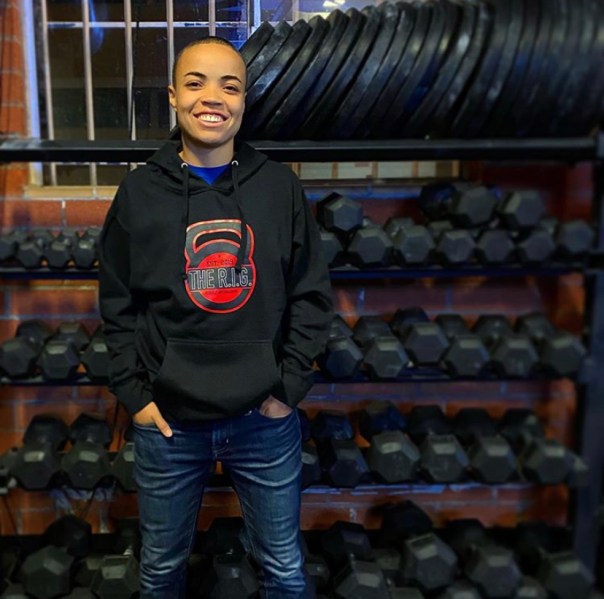
Ashley Shine – I grew up in San Francisco, I currently live in Santa Monica and will be moving to Boulder CO in August. The outdoors is my happy place, where I find myself again. I currently work as a Strength and Conditioning Coach and I am a full-time student at Colorado State University online program for Human Development and Family Studies. One of my biggest passions in the world is prison reform and fighting social injustice. After I graduate I hope to get a dual degree in law and public policy. 

Instagram: ashshine_

website: www.shinestrengthandconditioning.com 

nonprofit: www.rebuildinformgrow.org

Margie Gutierrez Lara – I am a young at heart forty something year old. I have been acting and doing theatre since the 90’s. I currently working for Kaiser Permanente Educational theatre and have been there for 15 years touring schools from Delano to San Diego. I am a mommy of one energetic 5-year-old boy named Charlie

Rosie Narasaki – Rosie’s theatre highlights include acting in IN LOVE AND WARCRAFT and TWO MILE HOLLOW with Artists at Play, as well as a pre-Greta Gerwig turn as Amy in Playwright’s Arena’s multicultural transposition of LITTLE WOMEN. As a writer, her work has been developed/produced by MeetCute LA, Artists at Play, the Road Theatre Company, and more. In her spare time, she is the managing editor of TotalBeauty.com.

@rosienarasaki

New Play Exchange
IMDb

How have you been spending your time at home during the quarantine?

Ashley Shine (AS): During this quarantine, I have tried to maintain my fitness and continue to workout 5-6 days a week. I also am still working and still balancing being a full-time student. Something I found to be new is that I am letting myself sleep in past 6 am which has been really nice. 

Margie Gutierrez Lara (MGL): I have been working at home trying to create virtual content for our ever changing world and balancing being a mommy/teacher.

Margie, a member of Kaiser Permanente Educational Theatre suggests, “If you are a parent you can follow our Kaiser Permanente Educational Theatre family programs where you can find tips in both English and Spanish on stress management, literacy, and nutrition”.

Rosie Narasaki (RN): For my day job, I work as an editor at a website. Luckily, this type of work translates super well to telecommuting — though I definitely miss my co-workers.

The biggest gap in my life is all my theatre and acting “extracurriculars” — I used to keep pretty busy with auditions, readings, workshops, rehearsals, and classes (and spending hours on the freeway, of course). I felt lonely at first without it all, but I’ve been trying to do online stuff in the interim.

Did the quarantine affect any of your creative projects or plans?

MGL: I was going to start auditioning outside more and then this pandemic happened and I felt like all my creativity left me. I find it hard to create because I have to for work and for my child.

RN: Yes! I spent the first few weeks intermittently moping over a reading of my play that got cancelled… and scolding myself for moping (since I’m super lucky, all things considered). The reading was postponed for fall, and I’ve had other opportunities crop up since, so things are going well (again, all things considered).

@artistsatplayla

How, if at all, has this time affected your creativity?

AS: I have found myself to be going in waves with creativity and work during this time. I either feel incredibly motivated or just want to lie on the floor and not speak. 

MGL:  I just feel down and out and see others creating magic and I’ve just been working at home and dealing with a 5 year old that wants all my attention.

RN: Like a lot of people, I found it hard to work at first. I’m kind of a results-driven person, and with so much uncertainty surrounding the theatre scene/when it’ll reopen, creating stuff right now kind of feels like shouting into the void (even more than it usually does, anyway).

To give myself short-term goals, I enrolled in a couple writing classes, which has been great. I’ve also been meeting with a writing group — New West Playwrights at EST/LA —on Zoom, which has been a real highlight. Oh, and I do weekly play readings with my parents and some family friends.

Personally, do you feel that its necessary/important to keep creative during this time?

AS: I don’t think it is necessary to be anything during this time. Our mental health should always be at the top of our priority list, so I think if anything we should all be constantly checking in with how we are doing. Creating a space of vulnerability and maybe even sometimes set aside to heal from things we haven’t had the chance to face.

MGL: I think it is important to do what you love and share it with others. I love seeing my creative, talented friends posting videos.

Margie Gutierrez Lara plays Giggles in the upcoming comedy horror series, “Bloody Maria”.

RN: I think this is a case of “you do you?” I totally understand that some people feel driven to create to curb their anxiety, fill the gaps in their schedules, etc. But I also get that some people feel kind of overwhelmed by it all. I think I fall somewhere in the middle.

Something I’ve started to accept as I’ve gotten older is that, while it ebbs and flows, creativity is always going to be something that’s part of my life. Some years will be more fecund than others, but I don’t think I’ll ever stop. And that helps me feel better when I’m facing writers’ block and/or an acting dry spell (or, you know, a global pandemic).

What have you found most frustrating about this time, creatively or otherwise?

AS: I have found the pressure to hustle and be this unrealistic person during this time to be so frustrating. It is okay to not be okay and its also okay to just be okay. This new pressure to be creative or fit or whatever all while being locked in the house seems unfair. 

MGL: I’m just busy creating things for work that I haven’t sat down to create something for myself.

RN: Honestly? I’m a bit lonely. Zoom interactions just aren’t the same! And over the past several years, I’ve always kept up a fair amount of momentum with theatre stuff, so it’s been tough feeling literally stuck in one place; static.

What is something that you’ve learned about yourself during this time?

AS: I have learned that I need to take more time to pause and breathe and see what I want out of life. I sometimes forget to evaluate where I am at and am I chasing my dreams or somebody else’s? 

MGL: I’ve learned that I am flexible and willing to pivot and change where our new normal is headed.

RN: I didn’t realize how social I was! I’m not a party animal or anything, but between classes, supporting friends’ projects, and my own gigs, I’d be out 4-5 nights a week on average. Add that to working a 40-hour week, and I was pretty much never home, pre-shelter-in-place.

What is something/someone that has brought you joy during this time?

AS: My girlfriend Kailey has brought me so much joy. Being together 24/7 has given a lot of space for great conversations, planning, bumping heads, etc. We have had to find creative ways to have date nights and all that. She is such an incredible human being and I am nothing short of lucky to spend my time with her. 

MGL: My son Charlie and the tik too queen Rosa aka adamrayokay

RN: My favorite thing about working from home is that I can now stalk my dog full-time. I love her more than she loves me, but we’re both (mostly) okay with that. God, I didn’t realize how creepy this would sound until I started writing it down, but my phone is full of pictures of her sleeping…

<3

About a Chicana Falsa

by Zury Margarita Ruiz

I was introduced to her work in high school…

I’m not sure how it came about, but the folks at my high school decided that they wanted to have a cultural celebration of sorts. All 45 seniors and 20, or so, underclassmen at our little magnet high school were expected to participate in some capacity. While I was part of a Mexican folkloric dance group at that time, I had no intention of dancing in front of my entire school. As I’d mentioned in a previous post, there was very little fun I took from that endeavor. Additionally, I was still traumatized by the demands of peddling the “joy and skills you too can acquire” of accordion playing to my middle school classmates that I just wasn’t going to put myself out there like that anymore. Still, I was expected to participate.

Unsure of what to do, and with a day to go, my Spanish teacher (who was coordinating this whole ordeal) suggested that I read an excerpt of short story written by a Latin@ author. I hate to admit it but at the time I can’t say that I knew the work of very many Latin@ authors—call it a lack of awareness/exposure, ignorance, what have you, I was drawing blanks.  So my Spanish teacher handed me a few books from his desk and encouraged me to check them out, and from those few, I was immediately drawn to Michele Serros’ Chicana Falsa and Other Stories of Death, Identity, and Oxnard.

Copy of Chicana Falsa

Chicana Falsa was a compact offering of non-fiction and poetry detailing Serros’ complex, comical grappling of her own identity. It was genuine, often times heartbreaking, and funny as hell. It was one of the first pieces of literature that I deeply connected to and made me feel seen. 

Michele Serros reading her work at Lollapalooza.

For our school celebration, I ended up selecting the story “Attention Shoppers”. It was a satirical piece that shows Serros being made aware of the notion that, even within supermarket aisles, discrimination was alive and well. This was proven to her by way of packaging styles for Malibu Style Vegetables vs. Latino Style Vegetables and the connotations each evokes.

“…. look at this, the Latino Style Vegetables are all spilling out of this wicker basket, all overflowing, messy like. Insinuating that we are overflowing, overcrowding what they think is their land. And what’s with this wicker basket?”  

Back in January I had the pleasure of visiting an exhibit at University Hall (Cal State University Chanel Islands) in honor of her life’s work.

I cried when I saw the exhibit.

Most everything that she’d been inspired by and written about was there— the desk her mother gifted her, journals, framed t-shirts, concert tickets, her skateboard…  it was overwhelming. Michele Serros’ work has meant so much to me for a very long time. I often think of her, her writing and the impact her artistic voice has had on me. She’s the writer whose work I most often go back and re-read. I love the familiarity. It feels like home.

I meant to post these photos a while back but it didn’t feel right then. I was writing about loss and it’s not what I wanted to do, especially in a week that already felt so sorrowful. I decided then that I would give it some time and wait until my next go-round on the blog to post them because surely the world would be in a different place from where it was at the time.

And we are, now, in a very different place.

But it feels right to remember the people, places and voices that bring us joy.

In fact, there’s no better time than now.

Let it Come…

by Robin Byrd

In the green and blue mist

I make my way back to earth borne tragedies, dimly lit pathways, and houses full of clutter

I would run but my knees ache and I am tired of the switchbacks

I would rest but pine needles are sparse in this part of the forest

The Wind says something’s coming

The cold is like ice on my bones, joints crackling louder than whatever that is that’s following me

I would be afraid but I have an urgent need to draw blood

The years have changed me and I can no longer hide the warrior side of me

Let it come

I will be as Simeon and Levi against Shechem

I will roar like Judah

My yell will topple the trees for I am, indeed, Judah’s daughter

A double portion I was given and I shall draw blood

Let it come, quickly in this thick solitude that blankets the night

Let it wake the birds and startle the muffled river for I am full of righteous indignation

I need to fight, I’m not running anymore

Shall the uncircumcised overtake me?  Shall they make sport of me?

Nay; it will go another way this day

If I make the clearing before the attack

I will wade into the river and draw it in after me where my hands shall drag it beneath to the water’s bed and I will break it like a stick

If I must fight in this forest

I will stand here, in the middle, like Shammah, son of Agee the Hararite when the Philistines came and he stood in the middle of the lentil field and fought victoriously, he took his stand and defended the field and struck them down

I too shall defend and strike down —

This thing that follows me, hunts me like prey, taunts my life ,

Will do so no more for I shall be a terror to it this day…

Let it come

Judah’s girl is woke and pissed the Hell off….

The Chickens Came…

by Robin Byrd

I have not remembered….
I have held my peace and kept time by the PTSD manager on my phone
Been holding it all inside the holes in my teeth
Losing them one by two by three

If silence is the enemy then you are the monster under the bed
Grabbing at my hands, waking me up
So I can never sleep through the night


I refused to remember…
I have pushed that dunghill many a day
to the fourth corner of the earth
And left it there with the full and ugly memory of you and your touch
Nearly comatose for decades by the weight of it all, by weight of you
Hardly breathing
Hardly living, hardly able to think
Above the maddening secret
That Flashbacks never leave you
They mutate like sketchy thoughts after a head injury
Leave you sinking in mire
The sill clinging to your knees and thighs


I have sat in the troubled waters
Broken from the top down
Soaking my big toes and the place between my thighs scarred like burnt skin
And lost dreams
The smell unearthingly foul yet familiar
Bone tired and nodding like an addict mid-fix
Hoping to Forget-it-all
Slowly embracing the lull and hum of stagnation


Then Byron died and the flood came
and the chickens
Well they came home, flatfooted and tough from age
They came home like they belonged to me
3 months later, they are roosting