Category Archives: Interview

Creatives Check-In, Part II

by Zury Margarita Ruiz

For the second installment of my “Creatives Check-In” series, we welcome and hear from…

Valerie Gibbins (top left), Christine Hamilton-Schmidt (bottom left), and Amanda Harmon Koppe (right).

As relayed in the previous post, my goal with this series is to highlight how creative folks are reconciling with their creativity during this precarious time. In the spirit of creative camaraderie, I aim to highlight creatives from various fields as I strongly believe we fuel each other’s work. I am so thankful for their participation.

Featured Creatives – A Short Bio:

Valerie Gibbins is a textile and industrial designer from Oakland, CA. Her work straddles many disciplines, attempting to highlight the intersections of feminism, sustainability, art, function, and design thinking. 

www.vmgibbins.com / Instagram: @villusionary and @sewdemhanz (Professional Account)

Christine Hamilton-Schmidt is a Los Angeles based playwright and screenwriter. Her work has been developed and produced at Skylight Theatre, Ammunition Theatre Company, Ensemble Studio Theatre/LA, The Blank Theatre, Team Awesome Robot, The Parsnip Ship, and more. Her full-length play, CHARLOTTE STAY CLOSE, had its world premiere production at Ensemble Studio Theatre/LA in September 2019. She is the founder and co-program director of New West Playwrights, which was created to give voice to and foster the work of young playwrights in Los Angeles. More information at www.christinehamiltonschmidt.com

Instagram: @christinehamiltonschmidt / Twitter: @christinejhs

Amanda Harmon Koppe is an Actor, Writer, and LA native. Amanda’s passion lies in empowering others through her art, as well as coaching others to create their own work.  She received her BFA in Performing Arts: Acting from AMDA College & Conservatory of the Performing Arts, has written a feminist-comedy feature film screenplay, as well as the short film Siri 2.0, depicting technology’s intrusiveness in our daily lives. She’s starred in a number of commercials and short films and when she’s not acting or writing, you can find her as a Production Manager, Teaching Artist or Yoga Instructor.  

Instagram: @amanda_harmon 

How have you been spending your time at home during the quarantine?

Valerie Gibbins (VG): There’s been a lot of eating, baking, cooking, staring into space, staring at screens, laundry, watering plants, having no clue what I’m doing, watching ’90s Disney movies, stressing, sewing, making masks, playing with fabric, and eating chocolate. There’s never enough chocolate in this house.

Christine Hamilton-Schmidt (CHS): I go to bed between 1:30 and 2:30am and wake up between 9:00 and 10:00am. I make big batches of cold brewed hibiscus tea and bake cakes. I bought a dry erase board, and I write a to-do list for my weekdays and feel really good every time I cross an item off the list. I write in notebooks in an attempt to spend less time in front of a screen. I talk to my cat a lot and call my mom every day. 

Amanda Harmon Koppe (AHK): I am the kind of person that needs to stay busy and I’m still learning to forgive myself when I don’t finish everything on my to-do list. I started thinking about what I could do from home that would take my mind off of our current global crisis and would help others do the same. I ended up creating Arts & Crafts tutorials on Youtube for kids. I was surprised to put my acting, writing, filming, directing, and teaching skills into use by developing these holistic crafting lessons for children from my kitchen table. 

Amanda’s Arts & Crafts with UPSTAGE.

Did the quarantine affect any of your creative projects or plans?

VG: I teach sewing classes, so those were all cancelled. Thankfully, I did not have any major plans this year since I was looking for full-time work anyway. That effort went down the tubes, obviously. 

CHS: This is WILD, but my “career” has never been better. Quarantine has opened a magical door to working on other people’s projects and being encouraged by others to write. I have collaborators getting in touch with me and giving me deadlines in a way I never have. I feel really lucky, but also tired and worried about letting people down because some days I just can’t write.

AHK: In early March, I had been going on auditions, developing a few TV pilots, working on an ebook and outlining another feature film, but once our reality came to a screeching halt, it was much harder for me to focus on any of my creative endeavors. It was exhausting to even try working on projects I had once been passionate about. Everything I had been doing felt really small in comparison to an overwhelming feeling of uncertainty and dread. It made me think of the John Lennon quote, “Life is what happens to you while you’re busy making other plans.” 

How, if at all, has this time affected your creativity?

VG: On one hand, I feel like an amorphous semi-sentient blob most of the time. But then on the other hand, this time has actually pushed me to sew more and look at growing that more as part of my work. It’s given me time to waffle and question, but also time to sit down and sew for hours on end. This is definitely not to say that quarantine = start a business! It’s more about clearing away the cobwebs in my case. Now is not the time to pressure or shame yourself into doing something you do not feel equipped to do. 

CHS: I want to sit around all day. I feel very lucky when I have an urge to write, but most of my writing has been a result of deadlines and I am so grateful to my creative partners for that. I think reading books and scripts and watching film & tv is a way to be creative and so I’ve been indulging in art intake.

AHK: I stopped judging myself for not accomplishing what I had planned on doing and that helped my creativity return in waves. It’s difficult enough for me to keep track of what day it is, so instead of giving myself a usual incentive deadline, I keep all of my projects circulating in the ether of my mind.  Almost everything in my apartment is organized (for my own sanity), but when it comes to my ideas and thoughts– my creativity can get messy. When an idea hits, I write it down on anything I have on hand. If you walked through my front door right now, you would see random post-its, paper towels, napkins and journals floating around everywhere. It feels great to get my thoughts on paper and I could tell you exactly what is written on each one. It’s almost as if I’ve designated different areas of my apartment with a certain idea and when I’m in that area, that project/idea is what circulates in my mind and word vomit comes out. It’s like going to an amusement park and choosing what ride you want to go on that will make you toss your cookies (but for fun).  

Personally, do you feel that it’s necessary/important to keep creative during this time?

VG: This is an absolute given. In normal times, this would be part of a larger conversation on the importance of arts education. Not only is it important to those of us who choose a creative field for work, being creative nurtures the brain and can provide distraction and comfort. For me, just doing something as simple as looking at my fridge or pantry, sparks creative problem solving and switches my brain on. I think it’s so vital to put a creative filter on everything you do—and it just makes everything more fun.

CHS: No. No, no, no. Nothing is necessary other than staying safe. I think it’s important to take time to think about who you are when you aren’t working, what your values are, and how you can contribute. I think it’s important to reach out to people you love. Rest so you can be creative when you’re ready.

AHK: As crazy as my creative process does sound at the moment, if I didn’t have it, I honestly don’t know where I would be putting that frenetic energy. I’m a big advocate for the need to express yourself. I believe it is just as important to be seen and heard at this time of universal societal trauma as it is when dealing with an individual’s trauma. If you can take whatever you are feeling right now and translate that into a drawing or painting or monologue or video, you will find that it is not only healing, but it will connect you to others who feel the same way. No matter how isolated I may feel, I find solace when I remember that I am not alone in this experience.  

What have you found most frustrating about this time, creatively or otherwise?

VG: Oh, well, I mean…the “governance” of this country is utterly enraging. Anger can definitely be a motivator, but it’s turned very obsessive during this time; I’ve had to step away from watching news clips and be very conscientious about the time I spend on the internet. Though, I’m very grateful to even have access to information and the internet (#netneutrality).

Otherwise, I miss hugging my friends and family. It’s very frustrating to not know if they’re sick or I’m sick or if we should be going to the grocery store, etc. Everything and everyone has been in limbo for nearly two months. It’s not a comfortable or natural state for most humans. I think in some ways I had an easier time than most adjusting to sheltering in place because I’m a homebody and because I’ve been in a precarious limbo state (job-wise and mentally/emotionally) for a while. 

CHS: I miss my friends and my family. It frustrates me that I can’t hug them. 

What is something that you’ve learned about yourself during this time?

VG: I am a pretty self-aware person in the first place, so there haven’t really been any new revelations. However, I have definitely started being actively more forgiving and kinder to myself. I would say there’s been a lot more affirmation than fresh learning, which is truthfully what I’ve been struggling with for years. So, I guess, thank you Madame Corona for holding myself accountable to years of therapy!  

CHS: I’m a lazy Taurus. I will always find something to clean. I want to write a novel (I knew this as a joke before quarantine but now I know as a serious thing). 

AHK: I learned to be creative with finding purpose in my life. I never thought I would be making Arts & Crafts videos, but here I am. When it felt like the world was ending, Amanda was crafting. I also learned that it’s ok to not be productive. My body and mind have needed more rest because I’ve been in a constant state of stress since I started self-quarantining. I always thought accomplishing long-term goals was a great achievement, but now I think accomplishing little tasks feels just as great. I had the courage to get up this morning and take out the trash with gloves and a mask– yay, gold star! 

What is something/someone that has brought you joy during this time?

VG: Communication with friends and family has always been number one. The past few years, I’ve cultivated amazing friendships by having epic phone chats and this time has allowed that to blossom since no one has a schedule anymore. I’ve been fortunate that I have been able to see my sister and brother-in-law (we’re basically one “household”) and therefore play with their dog. They joke I only come over to see her, which is not entirely untrue. 

CHS: I don’t play Animal Crossing, but I like to listen to my husband play because the music and the voices of the characters are incredibly soothing. 

AHK: Every Friday night, I visit another era by lighting a pair of candles on my great-grandmother’s candleholders and watch them flicker. I am reminded of how grateful I am for the technology and medicine we have today and that this too shall pass. 

<3

Creatives Check-In, Part I

by Zury Margarita Ruiz

Pretty early on during this time of isolation, something that I quickly came into my attention where social media posts that talked about all the new skills, tasks, and hobbies we should either be mastering, acquiring, or working on all while at home.

At one point I truly started hyping myself up about all the things that I needed to do, but my feelings and energy never seemed to match up with those ideas.  Pandemic aside, its already hard enough to get myself in a creative state, so hearing things like this, even when they are meant to be encouraging, ended up being frustrating, even offensive. I think that everyone has their own unique experience of what’s going on are able to work creatively, or not, from that awareness, so my goal with this and other upcoming posts this week is to highlight just that—how other creative folks are reconciling with their creativity at this time.

For this small series, I wanted to hear from all creative types, as I strongly believe that everyone’s creative work is linked—something another artist might say or do can inspire me (or you, Dear Reader) and vise versa. We all fuel each other, is my point. That all being said, for a little context—these creatives where all messaged the same questions, which I asked them to answer (or not) as they saw fit. Personally, it was great to connect with them at this time, check-in, and read their responses. I’m so thankful they agreed to be part of this series.

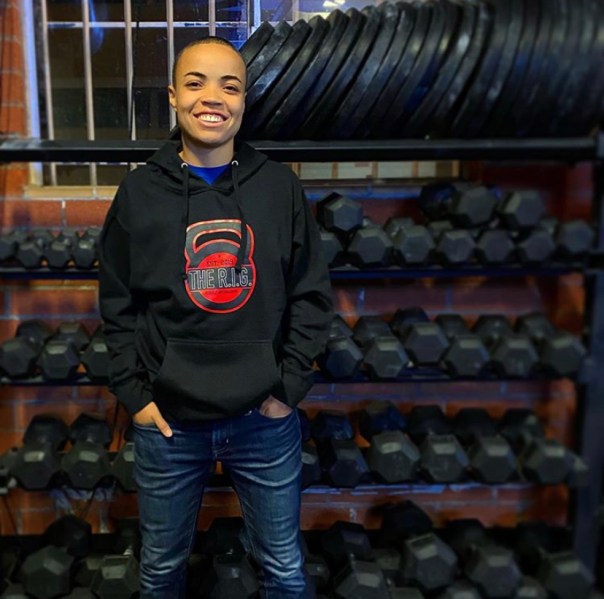
Ashley Shine (top left), Margie Gutierrez Lara (bottom left), and Rosie Narasaki & her dog, Sophie (right).

Featured Creatives – A Short Bio:

Ashley Shine – I grew up in San Francisco, I currently live in Santa Monica and will be moving to Boulder CO in August. The outdoors is my happy place, where I find myself again. I currently work as a Strength and Conditioning Coach and I am a full-time student at Colorado State University online program for Human Development and Family Studies. One of my biggest passions in the world is prison reform and fighting social injustice. After I graduate I hope to get a dual degree in law and public policy. 

Instagram: ashshine_

website: www.shinestrengthandconditioning.com 

nonprofit: www.rebuildinformgrow.org

Margie Gutierrez Lara – I am a young at heart forty something year old. I have been acting and doing theatre since the 90’s. I currently working for Kaiser Permanente Educational theatre and have been there for 15 years touring schools from Delano to San Diego. I am a mommy of one energetic 5-year-old boy named Charlie

Rosie Narasaki – Rosie’s theatre highlights include acting in IN LOVE AND WARCRAFT and TWO MILE HOLLOW with Artists at Play, as well as a pre-Greta Gerwig turn as Amy in Playwright’s Arena’s multicultural transposition of LITTLE WOMEN. As a writer, her work has been developed/produced by MeetCute LA, Artists at Play, the Road Theatre Company, and more. In her spare time, she is the managing editor of TotalBeauty.com.

@rosienarasaki

New Play Exchange
IMDb

How have you been spending your time at home during the quarantine?

Ashley Shine (AS): During this quarantine, I have tried to maintain my fitness and continue to workout 5-6 days a week. I also am still working and still balancing being a full-time student. Something I found to be new is that I am letting myself sleep in past 6 am which has been really nice. 

Margie Gutierrez Lara (MGL): I have been working at home trying to create virtual content for our ever changing world and balancing being a mommy/teacher.

Margie, a member of Kaiser Permanente Educational Theatre suggests, “If you are a parent you can follow our Kaiser Permanente Educational Theatre family programs where you can find tips in both English and Spanish on stress management, literacy, and nutrition”.

Rosie Narasaki (RN): For my day job, I work as an editor at a website. Luckily, this type of work translates super well to telecommuting — though I definitely miss my co-workers.

The biggest gap in my life is all my theatre and acting “extracurriculars” — I used to keep pretty busy with auditions, readings, workshops, rehearsals, and classes (and spending hours on the freeway, of course). I felt lonely at first without it all, but I’ve been trying to do online stuff in the interim.

Did the quarantine affect any of your creative projects or plans?

MGL: I was going to start auditioning outside more and then this pandemic happened and I felt like all my creativity left me. I find it hard to create because I have to for work and for my child.

RN: Yes! I spent the first few weeks intermittently moping over a reading of my play that got cancelled… and scolding myself for moping (since I’m super lucky, all things considered). The reading was postponed for fall, and I’ve had other opportunities crop up since, so things are going well (again, all things considered).

@artistsatplayla

How, if at all, has this time affected your creativity?

AS: I have found myself to be going in waves with creativity and work during this time. I either feel incredibly motivated or just want to lie on the floor and not speak. 

MGL:  I just feel down and out and see others creating magic and I’ve just been working at home and dealing with a 5 year old that wants all my attention.

RN: Like a lot of people, I found it hard to work at first. I’m kind of a results-driven person, and with so much uncertainty surrounding the theatre scene/when it’ll reopen, creating stuff right now kind of feels like shouting into the void (even more than it usually does, anyway).

To give myself short-term goals, I enrolled in a couple writing classes, which has been great. I’ve also been meeting with a writing group — New West Playwrights at EST/LA —on Zoom, which has been a real highlight. Oh, and I do weekly play readings with my parents and some family friends.

Personally, do you feel that its necessary/important to keep creative during this time?

AS: I don’t think it is necessary to be anything during this time. Our mental health should always be at the top of our priority list, so I think if anything we should all be constantly checking in with how we are doing. Creating a space of vulnerability and maybe even sometimes set aside to heal from things we haven’t had the chance to face.

MGL: I think it is important to do what you love and share it with others. I love seeing my creative, talented friends posting videos.

Margie Gutierrez Lara plays Giggles in the upcoming comedy horror series, “Bloody Maria”.

RN: I think this is a case of “you do you?” I totally understand that some people feel driven to create to curb their anxiety, fill the gaps in their schedules, etc. But I also get that some people feel kind of overwhelmed by it all. I think I fall somewhere in the middle.

Something I’ve started to accept as I’ve gotten older is that, while it ebbs and flows, creativity is always going to be something that’s part of my life. Some years will be more fecund than others, but I don’t think I’ll ever stop. And that helps me feel better when I’m facing writers’ block and/or an acting dry spell (or, you know, a global pandemic).

What have you found most frustrating about this time, creatively or otherwise?

AS: I have found the pressure to hustle and be this unrealistic person during this time to be so frustrating. It is okay to not be okay and its also okay to just be okay. This new pressure to be creative or fit or whatever all while being locked in the house seems unfair. 

MGL: I’m just busy creating things for work that I haven’t sat down to create something for myself.

RN: Honestly? I’m a bit lonely. Zoom interactions just aren’t the same! And over the past several years, I’ve always kept up a fair amount of momentum with theatre stuff, so it’s been tough feeling literally stuck in one place; static.

What is something that you’ve learned about yourself during this time?

AS: I have learned that I need to take more time to pause and breathe and see what I want out of life. I sometimes forget to evaluate where I am at and am I chasing my dreams or somebody else’s? 

MGL: I’ve learned that I am flexible and willing to pivot and change where our new normal is headed.

RN: I didn’t realize how social I was! I’m not a party animal or anything, but between classes, supporting friends’ projects, and my own gigs, I’d be out 4-5 nights a week on average. Add that to working a 40-hour week, and I was pretty much never home, pre-shelter-in-place.

What is something/someone that has brought you joy during this time?

AS: My girlfriend Kailey has brought me so much joy. Being together 24/7 has given a lot of space for great conversations, planning, bumping heads, etc. We have had to find creative ways to have date nights and all that. She is such an incredible human being and I am nothing short of lucky to spend my time with her. 

MGL: My son Charlie and the tik too queen Rosa aka adamrayokay

RN: My favorite thing about working from home is that I can now stalk my dog full-time. I love her more than she loves me, but we’re both (mostly) okay with that. God, I didn’t realize how creepy this would sound until I started writing it down, but my phone is full of pictures of her sleeping…

<3

An Interview with CCTA/LA Playwright and Producer, Paula Cizmar

by Zury Margarita Ruiz

Paula Cizmar is an award-winning multi-genre writer, associate professor of theatre practice in dramatic writing at the USC School of Dramatic Arts, CCTA/LA producer and my former professor. I LOVE HER!

Paula Cizmar <3

As she powers through the week, continuing to organize and promote Climate Change Theatre Los Angeles: At the Intersection and its sister event,  How To Create Your Own Environmental Justice Event: A Workshop with Chantal Bilodeau, I sat down with her to discuss her involvement with Climate Change Theatre Action and how its inspired the development of the aforementioned two-day Visions & Voices events.

Can you talk to me about Climate Change Theatre Action (CCTA)?

Climate Change Theatre Action is a grassroots event that happens every two years and it always coincides with the UN’s International Conference on Climate Change, which this year is in Santiago, Chile.

Chantal Bilodeau

Chantal Bilodeau, a native of Canada who was writing climate change plays, wrote a beautiful play called SILA and in the process of doing that, set up a kind of grassroots list of playwrights who were also writing climate change plays. In maintaining that list,  she realized there were a lot of writers doing this work and that a climate change theater action would be a really good thing to do. And so, what she does every two years is commission 50 playwrights to write very short plays that are then made available to anyone who wants to do them, free of charge. The playwrights represent 20 different countries and their own different languages—some of the ones that aren’t in English have been translated and others aren’t. Anybody who wants to do a Climate Change Theatre Action can just sign up and do one. If you go on the website I think you’ll see that they are being performed in 20 different countries and almost all 50 states. People can do a major production and turn it into a fancy theater event or they can do readings in their classrooms. It’s very grassroots.

How did you become involved?

In 2017, I got invited to go to Pomona College to talk about one of my plays, THE CHISERA, which is about climate change and I worked with Giovanni Ortega (CCTA/LA: AT THE INTERSECTION director, 2019) there. He also brought on Chantal as a guest speaker so I connected with them. Then I went to an Earth Matters On Stage conference, which is a conference of theater people who do climate change work, and forged more of a relationship with Chantal.

I also did a Climate Change Theatre Action event with my graduate seminar in eco-theater (2017). We just performed the plays in our classroom and then we took them outside and performed them on campus.

This year, for the 2019 Climate Change Theater Action, Chantal asked me to be one of the playwrights that were commissioned to write a play, but I also decided that I wanted to do something that was a lot more elaborate, so I applied for a Visions & Voices grant and got the funding.

And what is that elaborate undertaking? 😉

We’re doing a two-day climate change event. This coming Friday’s event (HOW TO CREATE YOUR OWN ENVIRONMENTAL JUSTICE EVENT, 11/8 at 3pm) is on campus. I would love for people to attend this first event because this one has the CCTA plays from around the globe. Of the 50 plays that were commissioned, six of those are being performed.

The really cool thing is I put the word out to some of my colleagues and asked if they thought there were any students who might want to direct these and two wonderful young undergraduates, Elizabeth Schuetzle and Jessica Doherty, stepped up and are directing three plays each. They’re also working with their friend, music composer and fellow student Cyrus Leland, whose created music for this student-driven event.

After the performances, Chantal will speak about how to create your own climate change—or any kind—of social justice event because these things don’t require money, they just require commitment and time.

Awesome. I think Chantal will be a great resource for anyone interested in creating social justice theater.

Absolutely. And, I think this is something all playwrights, and everybody, should step up and do at least once—create some kind of grassroots action to make the world a better place. If you sit around and wait for someone else to do it, they’re not going to. It’s important for us as playwrights to not sit around and wait. I understand the impulse, because playwrights like to be left alone. We like to be alone in our rooms, and we tend to be passive but every once in a while we have to come out of the cave and not be passive.

I’m in my cave now.

After this, I’m going into the cave.

Let me reel it back in—What is the second event? 🙂

The Saturday (CLIMATE CHANGE THEATRE ACTION LA: AT THE INTERSECTION, 11/9 at 2pm) event is all Los Angeles playwrights and what that one addresses is not just climate change around the globe but specific issues that affect Los Angeles directly. The climate change issues in Los Angeles are very different from say the issues in the Pacific Northwest or the issues in India or Costa Rica. I wanted to pay attention to that because I think a lot of times people don’t think climate change is an urban problem but its actually really important to urban areas and its particularly important to neighborhoods of color and people who come from low-income neighborhoods because they don’t have the political clout to fight.

I consulted with some people from the Program for Environmental and Regional Equity (USC Dornsife College of Letters, Arts & Sciences) about what the chief LA climate change issues were and they enumerated air quality, incompatible land-use, unfair distribution of water, the feast or famine problem of water in LA, and drilling , fracking and the storage of liquid natural gas. And added to that is our unique geography.  

Definitely! With this past week’s fires, I keep thinking about one of the pieces in particular.

Yes. It’s really interesting. Julie Taiwo Oni wrote a piece (ROOMIES) about the fires. Interestingly enough, when she turned that one in back in June I was glad someone took that (issue) on but didn’t think it was particularly relevant, and then last week happened. Suddenly, Julie’s is the most relevant of all of them. Not that they aren’t all relevant, they’re all interconnected.

Can you talk to me about the event’s subtitle, AT THE INTERSECTION?

One of my major issues is that people tend to think of climate change as a white middle class issue, and they also think of it as something that is distant in time. The fact of the matter is that environmental catastrophe affects low-income people more than it affects anyone else because they don’t have the means to buy their way out of it. It also affects people with very little political clout because they don’t have the means to influence their way out of it. I’m interested in intersectionality, hence, AT THE INTERSECTION, which is kind of a play on words. It’s not just that LA is a city of freeways, streets and lots of intersections, but I see this as “at the intersection” of art and science, and also at the intersection of many other cultural and identity movements. I think climate change is a feminist issue, I think it’s a racial issue… it’s definitely a status and economic issue. So that’s where the At the Intersection comes from.

It occurred to me that if I really wanted to see these works, I had to do it. I was probably the only person that was going to.

So, I know you primarily as a playwright, but here you’re taking on the role of producer. How did that come about?

Being a female playwright in America is kind of thankless. There are few opportunities. And being an older female playwright makes it even worse. And also the idea of trying to interest a theater in plays about important social justice issues or environmental justice—they honestly just don’t care. They may pay lip service to it, but we don’t see them producing these plays. It occurred to me that if I really wanted to see these works, I had to do it. I was probably the only person that was going to. I tried to interest other people in doing it and got no response, so I had to step in. I’ve produced with Visions and Voices before, on campus, but usually on a smaller scale. This one has been really challenging. Of course, Gio (Ortega), Simon Chau (production stage manager) and the people at the museum have been really helpful.

Yes. The Natural History Museum! How did they get involved? Did you reach out to them?

I did. I thought “you know, we could do this on-campus”, but then I thought, “Who else is doing this kind of work?” And what’s really wonderful about the Natural History Museum is that they take the city of Los Angeles and its diversity very seriously, and by diversity I don’t just mean in terms of population but also the diversity of its interests and topics. So climate change is one of the things that they actually have programs about. I figured that if I could get them to partner with us, then we would have a really interesting performance space.

And we do! We’ll be at the Hall of Mammals.

Yes, it’s going to be in front of, you know, those dioramas of the mountain goats… North American mammals.

*I do a happy dance on the inside and think about selfies with said mountain goats*

So yeah, I brought it to them, and lo and behold, they said yes. The really cool thing about this event is that it’s free to the public. That also means that if you make a reservation for the event, you get in free to the museum. You literally could spend the day at the museum and see all the really cool things that they’re doing there. They’re not just a museum of dinosaurs, they’re a museum of the natural history of Los Angeles, which is fascinating.

Meme by Moi with image from Getty images Plus

They’re actually trying to pay attention to what this city really is and where it grew from. They also have a climate change program now that they’re starting to develop. I’m very happy that we’re partnering with them.

How were the writers and production team selected?

A lot of the writers on this list were already writing about climate change, so I didn’t have to go out of my way and try to find LA writers that I was going to force into this topic. These are already people who are concerned about this and are writing about it. It’s interesting to me that there are a lot of women doing it. I also wanted to make sure that I had young and old represented, and I wanted to hit the culture of Los Angeles, so we have—Latinx writers, Asian American writers, black writers, white writers, and mixed race writers. I’m trying to re-create the community of Los Angeles via the playwright’s voices. 

Gio (Ortega) has been interested in climate change—its one of the topics that he takes on. He’s into social justice theater too. And that’s really what this is, social justice theater. Gio is the director in town that I know for whom this work matters. He’s traveled and done research on this work, leads a program at Pomona College’s theater department that also does a climate change theatre action in Pomona. He was a natural person to choose. 

I’ve worked with Simon Chau and Alex Rehberger (Production and stage management) in the past. They’re both USC grads. And Howard Ho is our go-to sound guy. That’s the team.

Talk to me about the short, original works that have been created for this event. What can we expect?

We have plays about children being affected by the toxic waste in their neighborhoods. Plays about gentrification. Plays about the Los Angeles River—the rehabilitation of it and the pollution in it. Plays about low-income people who have pumpjacks in their neighborhoods. Plays about trees and how LA needs to be more proactive about planting them because not only do they create shade, thereby lowering the temperature of the city, but they also help clean the air. We have plays about all of these topics, including incompatible land use, which you would think “How the hell would you write about that?”

Yes! But also, it wasn’t t only a matter of how to approach these topic that I found challenging, but the short format too. These pieces are each roughly 3-4 minutes long. So even though I wrote a play, it also felt like I was writing narrative poetry.

That’s really wonderful. Almost everyone addressed them poetically. And in fact, a couple of people have actually written spoken-word. We have this really wonderful mix of plays that are scenes, and some that are either wonderful comedic monologues or spoken-word kind of chats. It’s all really neat.

There’s also a micro opera.

That just happens to be mine. I work with this wonderful composer, Guang Yang—we have a full-length opera we’re working on—and I thought “we like to work together”,  so I asked her if she wanted to do a piece for this and she said yes. We took on the impossible topic of incompatible land-use. Ours is about a little girl whose school is under a freeway—because we don’t have zoning to protect kids, schools and playgrounds from being near a landfill or toxic waste or freeways. So the little girl comes home from school and tells her mother that she learned there’s a hole in the sky and her mother doesn’t want to hear about it. She doesn’t want to hear the bad news. So the little girl spins a fanciful tale of a Chinese goddess who’ll fix the hole in the sky, which helps the mother come around. It’s really neat. It’s a very experimental opera. The full length opera that Guang and I wrote has ten-singers, is orchestrated for an orchestra… but this little short opera is just one instrument—a keyboard—and some percussion sounds on a computer.

(Note: Paula’s full-length opera is being done in Pittsburg next summer!)

Can you talk a little about the theme guide created for this event?

My graduate students from my first year 574A (Dramatic Writing Across Media) class stepped up to create this. One of the media I’d pointed out to them is multiplatform media—creating theme guides and websites that have hyperlinks embedded in them so that people could go and see a video and get more resources. What they did was create theme guides for this entire event that has articles about environmental justice, the issues in LA, and organizations that you can support and join to help make change. It’s a really wonderful, colorful, beautifully printed guide that will be about 5-6 pages long and will include the program.

I could keep doing it (CCTA/LA) but then I’m the one that keeps learning these things and its time for somebody else to step up and learn about not only how to do this but also about the issues.

Is CCTA/LA something you’re hoping to continue to do every two years?

I would love for that to happen and I would love to be the guide and the advisor, but I would let somebody step up and take over. I think that’s one of the important things about being a playwright in America and that is that you don’t sit around and wait. And I also feel as if I could keep doing it but then I’m the one that keeps learning these things and its time for somebody else to step up and learn about not only how to do this but also about the issues. The best way to learn about them is to be directly involved. 

Final question—what excites you the most about the CCTA/LA: At the Intersection event?

What excites me the most, and I hope this happens, is that regular visitors to the museum, who are strolling through the galleries with their kids, drop in and see something happening. My dream is that we see little families seeing that there’s a theater event going on and that they stop and take it in so that they are, as a family, not only introduced to theater, but also introduced to the issues. I think its great that people are making reservations, I love that, but I also would love for all the casual passerby’s get drawn into it because I think it will be fun.

Thank you, Paula!

You’re very welcome.

Don’t forget to check out the CCTA /LA events!

References:

Paula Cizmar

http://paulacizmar.net/

Climate Change Theatre Action

http://www.climatechangetheatreaction.com/

Chantal Bilodeau

https://www.cbilodeau.com/

Earth Matters On Stage

https://www.earthmattersonstage.com/

Visions and Voices

visionsandvoices.usc.edu

How To Create Your Own Environmental Justice Event: A Workshop with Chantal Bilodeau

http://visionsandvoices.usc.edu/eventdetails/?event_id=30354568958120

Climate Change Theatre Action LA: At the Intersection

https://nhm.org/calendar/climate-change-theatre-action-la-intersection

Program for Environmental and Regional Equity

https://dornsife.usc.edu/pere

Climate Change Theatre Action 2019 – The Claremont Colleges

http://www.climatechangetheatreaction.com/event/climate-change-theatre-action-2019-the-claremont-colleges/2019-11-12/

Natural History Museum of Los Angeles County

https://nhm.org/

Giovanni Ortega

https://giovanniortega.com/

New on the LAFPI Podcast: “What She Said” – Alyson Mead with Maureen Huskey

Maureen Huskey

October, 2018

Alyson Mead speaks with Maureen Huskey about finding your voice, identity and her play The Woman Who Went to Space as a Man, opening October 27th @ Son of Semele.

Listen In!


What conversations do you want to have? Send your suggestions for compelling female playwrights or theater artists working on LA stages to Alyson Mead at lafpi.podcast@gmail.com, then listen to “What She Said.”

Click Here for More LAFPI Podcasts

New on the LAFPI Podcast: “What She Said” – Alyson Mead with Inda Craig-Galván

Inda Craig-Galván

August, 2018

Alyson Mead interviews playwright Inda Craig-Galván about questionable mothers, Carrie as a role model, and a better Scott Baio. The Playwrights’ Arena premiere of  I Go Somewhere Else plays at the Atwater Village Theater through September 17th.


Listen In!


What conversations do you want to have? Send your suggestions for compelling female playwrights or theater artists working on LA stages to Alyson Mead at lafpi.podcast@gmail.com, then listen to “What She Said.”

Click Here for More LA FPI Podcasts

Jump Start Creativity

By Kitty Felde

Sometimes facing a blank page on your laptop can be the most depressing sight on planet earth.

Nobody said playwriting was going to be easy. But the email rejections, the harsh feedback from your writing group, the statistics on the tiny number of new plays that get produced every year (and the even smaller number by female playwrights not named Lauren Gunderson) can just shut you down. Or, as I put it, take the heart out of the writing.

How do you get your mojo back?


I had the pleasure of interviewing writer Laurel Snyder whose middle grade novel “Orphan Island” is a very odd book – orphan kids on a desert island who come as toddlers and depart as teenagers to parts unknown. Needless to say, it’s not like anything else Laurel has previously written.

She says the book started as her own prescription for writers block. She was stuck in the “business” of writing and forgot about the joy. So she bought herself some toys – markers and paint and notebooks and her favorite mechanical pencil. She vowed to write the entire project in longhand and take the time to illustrate the characters. She drew islands and maps. She drew animals that didn’t exist that didn’t make it into the book. She had fun – the same fun she felt when she started writing when she was eight years old.

She promised herself that she wouldn’t show the project to anyone until it was done and if it didn’t get published, that would be okay, too. She would write a book just for herself.

Laurel got back in touch with the reason she started writing in the first place. She was writing out – putting on paper something inside of her that needed to get out in the world. In the process, she rediscovered the joy.

And of course, the book she created was so unique, it made the longlist for the National Book Award.

We’re not guaranteed such a reward of public recognition, but we can at least make the journey more enjoyable. Slow down. Buy a fabulous red gel pen with sparkles for the editing process. Find some fun stickers and reward yourself when you put down 500 words. Take yourself out for an outrageously fattening Toasted White Chocolate Mocha at Starbucks when you’ve written every day for a week. Give yourself permission to watch hours of Hallmark Christmas movies. Find a way to make the writing fun again.

And share YOUR secrets with us.

You can hear the whole interview with Laurel Snyder here. You can even hear kids dissect the book on this episode.

The FPI Files: LA Broads – Doing More Than Just Talking

LAFPI is pleased to be partnering with our friends at Broads’ Word Ensemble for LA Broads, a reading festival of short plays by (go figure!) LA female playwrights, directed by women. We love Broads’ Word – a group of femmes who truly walk the walk – and are looking forward to hearing stories of “perseverance, recovery, and unconventional podcasts.” We also (of course!) wanted to find out more about the writers. So we handed it over to the Broads’ Word ladies to come up with questions, and put them to the six ladies with works in the festival: Nayna Agrawa (Slut), Tiffany Cascio (Popcast & About Your Mother),  Allie Costa (How I Knew Her), Aja Houston (Remembrance), Uma Incrocci (Roadside Alice) and Starina Johnson (Border Towns & All Kinds).

Broads Word Ensemble: What’s your experience been like, being an playwright (who happens to be a woman) in Los Angeles?

Nayna Agrawal

Nayna Agrawal: Humbling! Particularly as a chubby Asian gal with a mustache.

Tiffany Cascio: I have found the theatre scene in Los Angeles to be very welcoming. I moved here four years ago and was lucky to meet the wonderful and supportive playwrights and actors of LAFPI & PlayGround LA right away. This year I participated in Hollywood Fringe which opened my world up to even more fabulous theatre makers, including the Broads’ Word Ensemble team, so I definitely feel like I’m part of a community now. I’m incredibly inspired by them and feel very encouraged to keep writing!

Allie Costa: I’ve been a performer and a storyteller since day one. As a kid, if I wasn’t acting, singing, or dancing, I was writing, reading, or directing. The same can be said today. There’s nothing I love more than being on set or on stage. I moved to Los Angeles to pursue my career because there are multiple opportunities here for multi-hyphenates. I am grateful for those who have paved the way, and I try to pay it forward and hire other women every chance I get.

Aja Houston: I am blessed to be a part of a great cohort of talented, supportive grad students at USC. I love having the safe space to create fearlessly. Since being in Los Angeles, for a year now, I have had a play commissioned for a rehearsed reading at Playwright’s Arena and a short play, Floating on Credit,  published by The Dionysian Literary Magazine. I am still very aware that as a Black female playwright there is a lot of work to do and I am more than up to the task!

Uma Incrocci

Uma Incrocci: Although I’m an LA native, I’m new to playwriting in LA as my writing has only been produced in New York so far. I’m excited to be kicking off my Los Angeles experience with this reading!

Starina Johnson: I’ve somehow managed to surround myself with very thoughtful, supportive, and positive people in the world of Los Angeles playwrights. I think I’ve been very lucky in that regard.

Broads’ Word: In 6 words or less, what are your plays about?

Nayna: Post-abortion, practicing English to Wheel of Fortune

Tiffany: Love, loss and podcasting. And family secrets spilled.

Allie Costa

Allie: Strangers cross paths in a graveyard.

Aja: A couple’s rituals of grief.

Uma: First woman to drive across America

Starina: For Border Towns – Living. And for All Kinds – Being true to yourself.

 Broads’ Word: How did this topic come up for you and evolve into this play?

Nayna: Personal experience (sigh).

Tiffany: Popcast was my response to people labeling the dumped “crazy,” just because they can’t get over their exes.  And  family secrets and “choosing” your family is something I write about quite a bit; About Your Mother was me having fun with that.

Allie: The idea for this script came to me while I was watching the television show Rectify. There was a scene in which the main character visited a graveyard, and I thought, What if someone had been at the grave when he arrived? And the rest is history.

Aja Houston

Aja:  I wrote this play four years ago because I needed healing from the trauma of the killings of so many black boys like Trayvon Martin. I wanted to assert their humanity, their souls, their right to love, their right to live, and to be more than a body to be discarded like refuse.

Uma: At the Smithsonian, I noticed this small plaque about Alice Huyler Ramsey – the first woman to drive across the USA. There was this amazing photo of her and the other women who made the trip in 1909, in an open car on a dusty road in their dresses and flowered hats. I quickly became fascinated with her and her story.

Starina: Border Towns was a concept I’d had for awhile, but couldn’t quite figure out how to make it work. It was a short play notice that made me realize the best way to put the idea on the page.

Starina Johnson

The story the doctor tells at the end is 100% true; I actually said that to one of the resident doctor’s when my mother was dying and made him cry. I still feel really bad about that. I don’t think anyone likes making people cry, but I like to think that conversation with me gave him a different perspective on the concept of treating patients.

All Kinds actually started out as a short film that I thought would have more impact as a play. I like to think of terrible situations then try to figure out what could possibly make that situation worse. For me this is the worst case scenario for these characters.

Broads’ Word: Do you have any upcoming productions or news to share? And if LA theatermakers want to reach out about your plays, where would they find more information about you?

Nayna: I just had a reading (on October 8th) at the Bootleg Theater of Catcall, a full length play. For more, visit  Naynaagrawal.com.

Tiffany Cascio

Tiffany: No new productions yet, but hopefully soon. And please do reach out! I’m @tiffanycascio on Twitter and my website is tiffanycascio.com.

Allie: My plays Unfinished Business and Safe Distance were both selected for The Fear Festival, running October 20th through October 22nd at Roebuck Theater in New York City.  For more info, visit www.alliecosta.com, connect @allieacts  or find my plays here: newplayexchange.org/users/995/allie-costa

Aja: I have a developmental production at The Inkwell Theatre of my play Journey to Alice, in February 2018. My website is www.ajahouston.net.

Uma: I organize a monthly reading series of new plays and screenplays at For Actors By Actors, an acting school in Hollywood. We are always looking for new scripts to read and would love to hear from LA writers. My screenplay Kris & Noelle (a holiday movie about how Santa and Mrs. Claus first met) will be performed on December 10th. Visit umaincrocci.com.

Starina: My short play, Static, is featured in NEO Ensemble Theatre’s production Tales from the Scrypt, running October 6th-22nd at The Underground Theatre. Tickets and more information are available here: www.neoensembletheatre.org  And for more information about me, go to www.StarinaJohnson.com or www.ChickPeaProductions.com

Broads’ Word Ensemble’s Executive Director Tara Donovan produces LA Broads; the plays are directed by Elkin Antoniou, Lesley Asistio, June Carryl, Gloria Iseli, Rachel Manheimer & Rasika Mathur.  Performances are Saturday, October 14th at 8:00 pm and Sunday, October 15th at 2:00 pm at the Flight Theater at The Complex Stages in Hollywood. For tix and info visit www.BroadsWordEnsemble.com.

Know a female or FPI-friendly theater, company or artist? Contact us at lafpi.updates@gmail.com & check out The FPI Files for more stories.

Want to hear from more women artists? Make a Tax-Deductible Donation to LAFPI!

Donate now!

Los Angeles Female Playwrights Initiative is a sponsored project of Fractured Atlas, a non‐profit arts service organization. Contributions for the charitable purposes of LA FPI must be made payable to “Fractured Atlas” only and are tax‐deductible to the extent permitted by law.

The FPI Files: Female Playwright in Space

When we heard that LA’s Fierce Backbone, home of some amazing women playwrights, was collaborating with the femme-friendly Drive Theatre on a new production, our ears perked up. And after learning the project was Amy Tofte’s murder mystery on a mission to Mars, WOMEN OF 4G, we felt we had to find out a bit more about what went on behind the scenes before this collaboration blasted off.

LA FPI: Love that a female writer is venturing into what’s often thought of as a male territory – space, the final frontier. What draws you to science fiction?

Playwright Amy Tofte

AMY TOFTE: I’ve always been into Star Wars and read tons of sci-fi. Even my plays/stories that aren’t sci-fi usually have an element of the fantastical or the famous “what if” being asked. I think I’m drawn to it because classic sci-fi is often related to allegory and challenging ideology. I’ve read somewhere that all sci-fi examines religion. I’d go further and say it questions what we know now by offering up an alternative of what could be. I was also raised and educated on truly magical theater experiences and I’m inspired to create moments that will be fun for an audience to experience together. I love seeing the impossible staged when I go to the theater.

LA FPI: Tell us a bit about the role the Bechdel Test played in the creation of this work, which has all an female cast.  

AMY: I think The Bechdel Test is important to all story telling and I think every writer should think about it. Novels, films, plays…it doesn’t matter. It’s important because I think we are brain-damaged as a society. All of us. It’s not just a divide that puts men on one side and women on the other. When you don’t have a society that represents true equality, the dominant (which is currently white male) becomes the default. It’s a real problem in stories and scripts. You’ll see a character described as “African-American” or “Chinese”…but then everyone else is given personality traits because the default is white.

Janlyn Williams, Jane Kim – Heidi Marie Photography

I give a lot of feedback on scripts and you still see really good writers who are very much about empowering women but their story somehow doesn’t give their female characters all the things a “default character” might get: the women in the stories will be denied making decisions and choices, denied making mistakes and having moments to learn, driving the action. I say we’re brain-damaged because that’s ingrained in us as children. I’m not saying anything new here. That’s why diversity is important in story-telling. If we don’t see women playing super heroes or leaders in our stories, we don’t expect them in our lives.

I’m also pissed off. I’m pissed off about the election. I’m tired of knowing that women are over 50% of the population and we still write less than a third of all produced plays and have so few reps in congress or as CEO’s of major corporations. It’s ridiculous we’re still even talking in these terms. But the best thing I know to do with that anger is to write a play with all women. And make them all complicated, interesting characters who get to kick a little ass when they feel like it.

LA FPI: Let’s talk about Fierce Backbone, a development lab that seems to be very supportive of women’s voices onstage. 

AMY:  Fierce has been the single most important artistic home I’ve ever had. The focus is on development and we produce when we have the resources and a script we want to produce. We’re now in our 10th year! Fierce has consistently boasted over 50% female playwrights in our Writers Unit. So it’s easy to also say the majority of our productions, workshop productions and readings have featured female playwrights. We’re very proud of that. I also have so much respect and gratitude for our actors. They are an incredible resource.

LA FPI: How did Fierce Backbone connect with Drive Theatre for this project?

AMY: Drive has been a friend of Fierce for a few years now. We’ve supported each other’s work and they did a workshop production late last year of one of our other writer’s plays (Defenders by Cailin Harrison). We’ve also shared development ideas and were always looking for projects that make sense to partner on.

I shared the first draft of 4G with Doug and Kat [Drive Theatre Artistic Director Doug Oliphant and Kat Reinbold, Curatorial Producer] in late 2015 and they got involved in the development process.  That was really energizing as we had a lot of new voices joining the conversation. Like any playwright getting produced, I feel very, very lucky! And I’m particularly lucky to see this through with people who have given so much to help the script grow.

[NOTE: This is Drive Theatre’s is a longtime friend of LA FPI and WOMEN OF 4G is its seventh straight production by a female playwright!]

LA FPI: What was it like in rehearsals, with such a femme presence… and and a male director?

AMY: OMG. It’s so amazing. And so noticeable. It also felt like the cast bonded immediately. It was like a room full of passionate, unruly schoolgirls one minute and then intense intellectual conversations about life and being a woman in this post-election world. It reminded me so much of all the great female friendships I’ve had over the years, where you can bond so quickly.

During our table work we all shared stories prompted by events in the play…times we were afraid, things we have to do as women that men don’t have to think about. It was also great having Doug there as our director because he was like a reality check that men are clueless about certain things in the lives of women. It made me realize that the making of this particular play could be just as important as the story and performance. I think we’re all taking away something special. These women feel like sisters to me, like we’ve all been through something together.

WOMEN OF 4G opened May 19, and plays through June 17 at the Zephyr Theatre in Hollywood. For more info visit the production’s Facebook Event  or http://www.drivetheatre.org/women-of-4g.html 


Jane Kim, Janlyn Williams, Samantha Barrios, Lily Rains, Cady Zuckerman, Jully Lee – Heidi Marie Photography.


Know a female or FPI-friendly theater, company or artist? Contact us at lafpi.updates@gmail.com & check out The FPI Files for more stories.

Want to hear from more women artists? Make a Tax-Deductible Donation to LA FPI!

Donate now!

Los Angeles Female Playwrights Initiative is a sponsored project of Fractured Atlas, a non‐profit arts service organization. Contributions for the charitable purposes of LA FPI must be made payable to “Fractured Atlas” only and are tax‐deductible to the extent permitted by law.

An Interview with Constance Congdon

by Anna Nicholas

As a playwright fortunate enough to participate in the William Inge Play Lab this year, one of my favorite Master Classes was given by Constance Congdon (Tales of the Lost Formicans, Gilgamesh, Raggedy Ann and Andy and others). Connie’s been teaching playwriting at Amherst College for twenty-three years and knows her way around a writing exercise*. She graciously agreed to sit down and talk about her plays, writing for theatre and what if anything had changed for women playwrights since the production of her first play, Gilgamesh, in 1977.

Constance Congdon


AN: What was your earliest theatrical experience?

CC: I had puppets and used to perform puppet shows over the top of my parents’ bed. Later, when I was in Junior High, I played “Mammy” in A Feudin’ Over Yonder and got a lot of laughs. Though I love actors I never wanted to be one. (Note: I saw Connie kick it in the “Improv to Page” workshop conducted by Ron West and Catherine Butterfield. Connie can act.)


AN: Did you study theatre in College?

CC: I was an English major and not a great student. It took me 6 years to get through. Of course it didn’t help that I kept moving and had to pay for school myself.


AN: So, no theatre in college. How did you find your way back to it?

CC: I had lots of jobs but the life-changer was as a mobile librarian. I discovered children’s literature and reading aloud to kids. Something was sparked and that experience served me well when I began writing plays and musicals for the Children’s Theatre of Minneapolis. I hadn’t known that would happen when I boarded the book mobile.


AN: What was your first play and first production?

CC: Gilgamesh at St. Mary’s College in Maryland where I was teaching remedial reading at the time. They gave me a first class production. Not all my plays have been so lucky.


AN: Tony Kushner calls you “one of the best playwrights our country, and our language, has produced.”[2] But for whatever reason, I’ve never seen or read any of your work. I’m going to rectify that now and catch up on your canon.

CC: Thank you.


AN: You taught at Amherst College for twenty-three years. Over the course of your career in both teaching and playmaking you must have observed some changes in how women are perceived in the theatre.

CC: Not as much as I’d like. There’s more opportunity for women and the awareness of the need to produce women’s plays has increased, but there’s still a resistance to the female voice, whatever that means. It extends to Artistic Directors and Literary Managers and sadly both men and women.


AN: Now that you are retiring from Amherst, what’s your game plan?

CC: At 72, I am energized to see more of my work get to the stage. A few years ago, I was fortunate to be part of Profile Theatre’s one playwright a year with a few of my plays. And I have just finished a new work called Hair of the Dog: The Foule Murder of Christopher Marlowe as Uncovered by William Shakespeare and am working on a book on playwriting with Mac Wellman and Jeff Jones.


AN: What advice would you give to female playwrights?

CC: My biggest piece of advice is to apply for grants; particularly state grants if they’re available. It’s usually other playwrights like me who read the plays and make the decisions, which is good. And if there are no state grants, apply for any arts grants that exist. If you want to teach, get your MFA. It’s important for the boards and administrations of most colleges and universities to know you’ve been vetted. Go to theatre festivals and network. Familiarize yourselves with different theatre departments and submit, submit, submit. I also advise not to worry about reviews. I’ve never gotten good reviews and I’ve made my peace with it.


AN: I loved your Master Class and the “rant” exercise *. Can I share it with the playwrights who read the LAFPI blog?

CC: Absolutely.


Constance Congdon’s “Rant” Exercise: As yourself or one of your characters, write a rant for a solid 10 minutes. Let the vitriol out at a person or something you hate. Don’t edit and write honestly, like you’re going to rip it up. Have someone call time at 5 minutes, 2 minutes, 1 minute and 30 seconds. The idea here is not to break up the “planning” that often occurs in the writer’s mind about what you’re writing. When you’re done, read it. Take a breath and then write for another 10 minutes but this time you are writing the rebuttal to your rant. You can be the person ranted against, or someone else with a strong point of view about the first rant. The third part of the exercise is to go back and forth between the original rant and the rebuttal, taking one or two lines from each and you might just find yourself with the beginnings of a scene.


Anna Nicholas just returned from the 2017 William Inge Play Lab, where her play, Ocotillo was chosen for development. Annanicholas.com


New on the LAFPI Podcast: “What She Said” – Alyson Mead with Deb Hiett

deb-heitt


Alyson Mead speaks with playwright Deb Hiett about development, trusting “the soup,” and the alternate universes of game shows in her new work The Super Variety Match Bonus Round, a Rogue Machine Theatre production currently playing at the Met Theatre in Hollywood

Listen In!


What conversations do you want to have? Send your suggestions for compelling female playwrights or theater artists working on LA stages to Alyson Mead at lafpi.podcast@gmail.com, then listen to “What She Said.”

Click Here for More LA FPI Podcasts