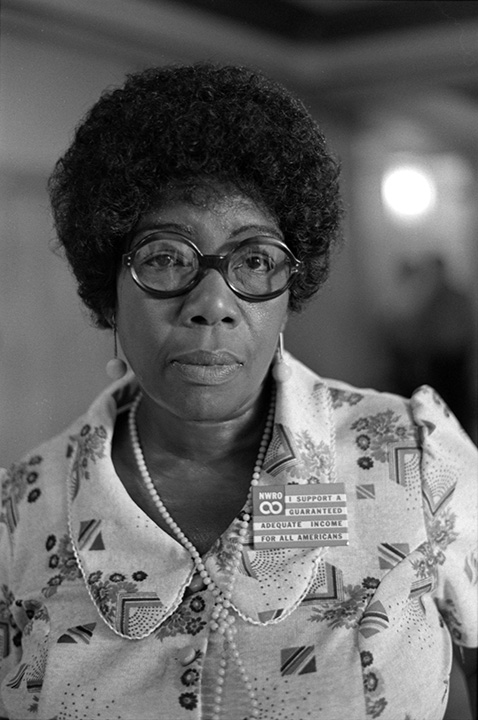
We know that when there is cultural and racial equality in theatre, it makes room for artists from all walks of life to contribute to the history of theatre. This past year has reinforced what we have been doing at LAFPI – putting women of all kinds first! It is vital that we make space and open doors wider for women from all cultural backgrounds if we are to have a bold, forward thinking American Theatre that reflects America.
Worth It! is Carla’s fourth fringe show! A hilarious comedienne who shares her wild talent in this fast paced, award winning musical extravaganza, Carla morphs into over forty characters as she questions her net-worth + self-worth. A show where hope takes the lead is a show we truly need during these disrupted times.
Constance: What do you hope audience members take away after experiencing your show?
Carla: I hope the audience walks away with a better appreciation of their own value in our world, and the power they have to change their energy by changing old thought patterns. Oh, and I hope they walk out humming the catchy songs! LOL
Constance: What’s been your biggest challenge in terms of your development/creation process?
Carla: Sometimes I go into “premature polishing mode” when an idea is still hatching. During the writing process, I had to gently remind myself to give my creative ideas room to fully develop on the page before I started editing.
Constance: What are you enjoying most as you create your show? What has been the most surprising discovery?
Carla: I’m enjoying making myself laugh during rehearsals. Even if I’ve said a line 20 times, sometimes I will hear it in a new way and think, “Son of a gun Carla, that’s funny!” As far as surprising myself, I’m always surprised by the messages my soul wants to give me. Those messages seem to come out on the page!
Constance: The work will be given away soon – how does that feel?
Carla: With every show, it feels vulnerable to share. But this time it feels particularly joyful to share because live audiences are finally going to be with us, and not just through a screen.
Constance: How long have you been sitting with this work? Why Fringe? Why this year?
CARLA: It took me two years to write this show. I think I was hesitant and even a little resistant because “Worth It” talks about money and my family’s relationship with money. For some reason, money seems like a touchy topic. The show also talks about the relationship between our self worth and how that can affect the abundance we let into our lives. The show is fast paced comedy with music videos, but still, these are pretty big themes! Why Fringe? Why not?! Fringe is a fun, creative, supportive wild ride! And Worth It takes place during the pandemic, so it’s incredibly timely right now.
We know that when there is cultural and racial equality in theatre, it makes room for artists from all walks of life to contribute to the history of theatre. This past year has reinforced what we have been doing at LAFPI – putting women of all kinds first! It is vital that we make space and open doors wider for women from all cultural backgrounds if we are to have a bold, forward thinking American Theatre that reflects America.
I am thrilled to have discovered Alma’s solo show online and hope that you all have a chance to experience Strong like Honey, which stars Alma Collins. This show is a love letter. A daughter recounts her generational relationship with her mother and grandmother and how ultimately becoming caregiver to her mother both challenged and healed their role reversal relationship.
Constance: What do you hope audience members take away after experiencing your show?
Alma: Just because someone doesn’t love you the way you feel you ought to be loved, it does not mean they don’t love you. I want people to walk away understanding the power of forgiveness. Healing and insight does not come from anger or revenge, but sometimes through simply doing what is right, no matter how one feels about a situation. I hope some of the memories I share about growing up in Venice will bring a smile to those who grew up there.
Constance: What’s been your biggest challenge in terms of your development/creation process?
Alma: The hardest thing I’ve had to overcome is the feeling of “Who wants to hear my story?”
Constance: What are you enjoying most as you create your show? What has been the most surprising discovery?
Alma: That I have so many stories and characters inside me. Maybe I can do as August Wilson did . . . he kept writing his stories, and through them all there was always a common thread. I discovered precious memories I’d not thought about in years.
Constance: The work will be given away soon – how does that feel?
Alma: I’m ready and not ready at the same time. I’m an actress. I’ve never tried to write anything before. It feels daunting at times. “Strong Like Honey” is my baby and I hope people find my baby beautiful.
Constance: How long have you been sitting with this work?
Alma: I began writing “Strong Like Honey” in February 2018. My friend and mentor, Adilah Barnes, has been trying to get me to write a solo show for years. I started taking Jessica Lynn Johnson’s free workshops a couple of years ago to learn about solo performances instead of just observing.
Constance: Why Fringe?
Alma: Why not? Plus it would be amazing to be invited to do my show in Edinburgh, Scotland. Maybe I’ll meet my Jamie Frasier out there.
Constance: Why this year?
Alma: I’d planned on doing Fringe last year, but it was cancelled due to Covid. I’m not glad it was cancelled, but I think I’m better prepared this year.
Constance: Please! Anything extra to share?
Alma: Two years ago I did a 15 minute excerpt for Adilah’s “Hot Off The Press.” I didn’t even have a complete script at the time, just an idea. A couple of months later, at Jessica’s free Saturday workshop, a woman tapped me on the shoulder and said, “I saw what you did a few months ago and it changed my life.” Her statement caught me off guard and also reminded me that when we have a gift, we are accountable for what we do with it. If anything I do or say encourages someone to forgive, to love, to go on their own journey towards healing, then I’ve done my job.
On July 7th, 2020 I sent the first email of three to LA Stage Alliance after I received a forwarded email that was meant to be sent out to members only. As I read the attached letter it seemed to be a letter welcoming discussion, feedback, and opinions – so I sent mine. I never heard back from anyone and this, to me, reflected a lack of resources and a broken system. A system that was not able to hear a wide array of voices nor did it seem to be accessible to share information nor learn more about our expansive theatre community from another perspective.
For the past four years I have been studying, researching, writing, debating + discussing the state of American theatre with a focus on the Los Angeles theatre community. The question I am always left with to ask is: How did a craft that relies so heavily on community and interconnectedness become exclusive? How do we actively create an accessible, available theatre community that makes room for all theatrical talent in Los Angeles to lend their voices to a new American Theatre?
I will say that Independent theatre artists engage in the very act of doing their own work by any means necessary. The very act of self-producing and finding a venue to present their work breaks traditional theatre hierarchies that have been kept exclusive by “Gatekeepers” – and let it be known these “Gatekeepers” are not only affiliated with predominantly white institutions. Power and control manifest themselves in subtle ways and we must beware of their foul intentions in all its many forms and faces. Yet, is there not a way to bridge the gap between academic theatre artists and grassroots theatre artists? Can we find a way to build a theatre community that makes room for trajectory and growth for all local theatre artists? How can we build a community of consistency, where grassroots artists can produce a play at The Complex or The Lounge and have it supported to the next level? It is time we, with love, in love, hold any organization or movement accountable that decides to take on the leadership role of representing the LA theatre community. There should be no lack of transparency nor should there be any fear in holding any organization accountable when it comes to representing the multi-faceted Los Angeles theatre community. It can be easy and engrained to uplift the same voices and ideas but let us not go back to normal and the familiar. Instead, let us honor what time has made way for, and may we rise up together for – a new and better way to build a representative theatre community.
I pose these concerns because I love theatre and I love all the artists I have collaborated with, encountered at theatre shows, as well as the artists I have witnessed on stage, in a variety of performance theatre spaces that often go overlooked. I pose these questions as a form of ritual that is sacred when creating theatre. What does community mean? What does it mean to bridge divides within a community? I always have to go back to Bell Hooks: that empowerment, that activism, that information must be accessible in order for change to truly occur on any level in a community.
Now that LASA has disbanded we find ourselves as a community in ripe times that are not to be taken lightly. We should all be welcoming a fresh slate to the changing and widening landscape that exists in our Los Angeles theatre community. May we lift our voices, show our faces and fight for the type of equity we wish to see in Los Angeles. Can we welcome new ideas, bold actions, and brave visionaries to lead us into creating a powerful, thrilling, and inclusive theatre community? I know we can and are. The time is now.
There is a Town Hall for the LA Theatre community being hosted by a fantastic group, the Joy Jackson Initiative. (There is also a Community Jamboard for members to include their dreams, wishes, hopes, and ideas. You can Click Here to add your voice.) The community meeting will occur on April 13th, 2021 at 6pm PT – TOMORROW!
“My name is Constance Strickland. I am Creative Director of Theatre Roscius, an experimental theatre company.
My reason for emailing today is due to my concern over the future of LASA + Ovation Awards.
It is a wonderful gift the Ovation Awards has celebrated L.A Theatre for 45 years but I’m truly concerned about how it excludes half of our Los Angeles Theatre community if you are an Independent Theatre Artist your work goes overlooked. This precedent that has been set ignores half of the Los Angeles Theatre Community and cheats us all of being truly connected and there is no real gage of the wide depth of talent existing in our city. For we all do the work for the love of theatre. We all honor storytelling and understand our theatre lineage must be rooted together if we are truly to build a New American Theatre Theatre for our city.
I hope as the Ovation team takes time away. I hope you see that patterns have occurred with many voices left out. That Los Angeles Theatre has many faces and we all win when artists of all backgrounds, Union or Non-Union are lifted up and welcomed into the L.A theatre community. When a widespread of BIPOC and Independent Theatre Artists of Color are being seen, being really supported then we need not have issues of space rental, membership fees, equity debates. There is no elitism and new work can continue to be developed on high levels to be shared and supported because there is acceptability. For we all know we have an unlimited amount of talent right here in our own front yard.
May the Ovation Team enter the next 45 years as visionaries who have the fortitude to see a new and broader Los Angeles Theatre Community that is not separated- instead is interconnected.”
I grew up in the high heat of Arizona. Endurance is a necessary skill needed in order to survive the long summers. I grew up playing + swimming in the community parks. I grew up the only little Black girl in my school between Indian School & Camelback Road. Within those busy roads was a winding street called Lafayette, where I first dreamed of telling stories with my body. I can still remember the age I became aware of the color of my skin from another human’s perspective. I can still remember the awareness of my body’s shape as it took a new form. Its ability to go through space. I soon discovered I would need to find ways to continue in harsh environments. The power ‘to go through’ is sacred, and even now, how I engage physically in space before building a new work has become ritual.
Endurance. I’ve come to see endurance as unseen magic. It spun itself and filled me up with pure will. Endurance made way for me to manifest Theatre Roscius. I used recycled fuel, my backyard, an old friend during the hottest summer, and I set off to build my first play from the ground up. Since then, I’ve created three new theatre works, three interdisciplinary art pieces, a collection of poetry, four short collage plays, and six short films, all using the body as the vehicle to tell stories that seek to heal the body, mind + spirit of women. Although I’m still learning, still finding my voice, I honor the time – the energy it took to get here, to be in this moment right now.
I thank endurance for saving me from myself, for pushing me on days when I didn’t think I could continue. I thank endurance for giving me the courage and the energy to build an anthology of work that is innovative, intimate, and reflects the women in my community who often go unseen. I thank endurance for giving me space to take risks.
Endurance. An old flame. A skill I harnessed. I swear, when hope and courage aren’t enough, I’ve learned endurance is magical adrenaline that will see you through, helping you go through even when you feel you’ve run out of fuel to continue.
Space. Over the past six months, I’ve become quite intimate with and have formed a new relationship with space. Beyond the space that I live in, how does space affect my work, how does space affect my spirit?
In preparing to film Theatre Roscius’ two new short films I needed to give myself space to think, absorb, and manifest in a pure manner. I had to find a way to trust that space is holding me up, that pushing forward in my own way was/is allowed. I had to give myself space from the collective so that my true voice could ring through all the noise. Space gave me room to breathe. It’s easy to fall back into a familiar pattern with space, to sink into a routine with her and dance in circles but I pushed myself to not succumb to her lyrical wooing in my ear. I stayed focused on the clearing of space. To keep only what I need and to let all else go.
Space has allowed me to shed dead weight and to mourn stale ideas, break away from stagnant actions and false words, and to treat my own voice with care. Space has widened – space has freed my spirit. Space has shown me to accept I cannot control and should not engage in everything. I’m practicing leaving space for the unknown, a wonderful challenge within the work and life.
Space continues to give me the confidence to not hold back who I am, to believe that thrusting all that I am into all I create reveals hidden pieces of myself but also helps me know when to take what I need and dares me to center my work without compromising my voice. Space has spread my work wide open and revealed to me how I have always been building a sustainable practice from the ground up.
Space has given me the opportunity to blaze my own trail, to not follow the collective, to see that my work exists between here and there, and that I am a grassroots artist whose work only flourishes if I’m aware of what disrupts my community from thriving as a whole.
Space reminds me I can go beyond my body, beyond my skin, and out my flesh. Space reminds me that making way for clarity is practice. Space reminded me that I’m building an ode to the future now. That Afro-nowism is alive and thriving. Space reveals that my body of work exists because I continued when there was/is no space for me to be a heterogeneous Black Artist.
Space has disrupted how I engage + evaluate artistic relationships while expanding and elevating my work. Yet, most importantly space made way for me to question, test, and push myself honestly in order to continue to build a sustainable art practice.
As British Artist Phyllida Barlow so inquisitively states, “The spaces, the silences in between, are as much a component of the work as the thing itself.” Leave space to adjust yourself. Trust in the space between what you know and do not understand.
There is no secret to doing. I have found over the past few months- almost a year now, that Sister Corita wasn’t lying when she said, “The only rule is the work.” I have found that leaning in and reaching out to colleagues, other artists of color and those who call themselves “allies” more often than not is not a great use of time and that most often or not it leads to no action. That often it can become a distraction in the way of doing the work. Now as I say this I will contradict as I have learned many lessons from that Art of Leaning In and Reaching Out. It was an idea I took seriously when I heard Sheryl Sandberg discuss this topic with journalist Norah O’Donnell in 2013 just as I was starting to take my idea of Theatre Roscius and birth it. It was perfect timing as I wanted to learn how to build a theatre company with a new perspective on how it could exist. I knew for me I wanted to absorb the minds of the women who had already paved a way and the women who were finding new ways of approaching the work in real time. And so I emailed. I called. I listened. I asked friends of friends. I leaned in at every corner and I learned how I needed and wanted Theatre Roscius to exist.
In working with a myriad of women as well as men, I discovered feelings may get hurt, and egos will be tested in the face of miscommunication, yet the work is the tie that binds and uplifts us. I also discovered that you can lean in and you will receive no reply, no answer, no support and you will have to find ways to continue your work. You will need to conjure and create your own new ways to continue to make and manifest those ideas that simmer in the back of your mind. That you will have to use all your energy and lean in to yourself. This is most certainly true for Women of Color who most often will be overlooked when “leaning in” occurs at arts organizations, theatre castings, or writer development workshops where often one Woman of Color seems to be “good” enough. Those will be the times when leaning into yourself and digging deep into your superpowers you’ve been gaining over the years will be fully tested and put into glorious use.
Although there is a new awakening occurring in the world of theatre and new ways of “leaning in” are being done, it may take years for change to fully open its doors to new ways of how theatre can live, for we know there must be visionary ways of bringing in new voices to expand on how the American Theatre can be. Leaning in requires focused intention and commitment; it will not sustain band-aid fixtures but will require consistency, thinking beyond along with bold moves and brave hearts.
I write this with the focus that although “leaning in” is vital it can not distract us from doing the work-alone if necessary. I am inspired as I see Artists go out of the box and risk it all for the work. I am excited for what the end of the year brings to the world of theatre and what will come in 2021 for all us who write down ideas in the midst of a fire and turn them into tangible magic. For those of us who find ways to tell stories when traditional spaces are not an option. I write this for those of us who do not focus on securing a seat at the table or being in the room where it happens because you are creating a new seat at a new table in a new room where new ways of making work are happening.
Granny passed away Saturday, September 5th, 2020 in the evening surrounded by her kids, grandkids, and great-grandchildren. A Titan who only spoke truth and never bent on who she was. A powerful woman who worked hard her whole life, but I didn’t know her whole story. I listened and knew the basics and granny never spoke the whole past, it came in pieces and I never got her full story. I can only honor my granny by urging other women to tell their stories. Do not leave your story up for grabs nor to be washed away by time. As I continue to absorb my mother’s story; I find and tell my story and through those actions, I may just tell my granny’s story too. Tell your story even if it seems you have no story at all. Archive your life, leave it for the future, leave it for those who come after. Undisputedly.
I come from a stock of women who tell their own stories in code.
Each never fully aware of their self-power.
Nomads__
Who walk with their ideas of freedom stamped upon their foreheads.
So__
I paint my face to reveal the brutal scars of war.
The mirror no longer my enemy-
is now, my friend.
I recognize the contour features of my ancestors,
My reflection revealing how much I can bear.
Memories of tribal wars, broken stories, and abandon homes.
Yet, what still to lives in memory is
the deep crescendoing laughter of song, and dance filled with hope.
For now__
I fight to eat and the chance to dance.
I begin to realize my reflection is her face.
I know the woman who appears before me.
Silent. She does not speak.
Silent. I do not speak.
This stranger so familiar
I can’t touch her.
She is cold. I reach out to hold her
I can’t reach her…
this woman
who looks like me.
What lingers, a women’s fear of death and life?
No___
She still remembers:
There once was a time when she came through space like fire!
A bright, fierce, unstoppable Afro haired girl
covered in wildflowers-
wearing…
a tattered dress, listening to an old beat-up boombox.
I will not lie. As a Black Woman and Black Theatre Artist, I’ve born witness to institutional theatre hindering Black storytelling in Los Angeles for years. I find access to new spaces limited or financially unavailable for Black Theatre Artists to develop new work. I’ve come to discover I’m often in the crossfire of hidden prejudices. As Black Theatre Artists we’ve experienced words thrust upon us such as angry, aggressive, and loud to silence our voices. Due to this, over the past few weeks, my feelings have gone from disconcerting to perturbed. I’ve had PTSD symptoms surface I didn’t know I carried within my body.
I will not lie. I see White Theatre Artists advocate for Black Lives while never once advocating for Black Theatre Artists. I see posts linked to where and how you can support Black Lives while not advocating for Black People you actually see. I am constantly flooded with content from peers simultaneously discovering and posting quotes from Black Intellectuals and Leaders while ignoring conversations Black friends have with them weekly if not daily. I receive forwarding articles on how to support Black Theatre Artists while being a Black Theatre Artist. I see feeds filled with stands of solidarity when I have personally experienced these same figures and organizations dishonor Black agency.
We’re existing in times where it’s a detriment to the Theatre to have colleagues, who are unaware of how they’ve become co-conspirators in age-old racism. Is the sudden influx of support for Black Theatre Artists a trend that will simply fade away and be unable to sustain itself, or are White led theatre organizations actually seeking ways to finally hear the eclectic voices of Black Theatre Artists that are developing work in the midst of our theatre community and offer real support? It causes you to wonder if they actually care to support the multitude of Black Theatre Artists right in the community.
This call to action is necessary. It is an overdue embarrassment. This moment in time reveals how disconnected our theatre community is from Black Theatre Artists. We exist within the Los Angeles Theatre Community. For a long time, we’ve been here. Reaching out. Doing the work by any means necessary without real support.
I will not lie. We’ve given power to these theatre “guardians”. We’ve allowed this white patriarchal system to seep into the roots of our ancient form of storytelling and taint its sanctity. We’ve given these “guardians” the key to control who goes through the doors. They decide who receives particular resources and opportunities. Now the roots are rotten and the branches are no longer able to hold themselves up. There is no doubt that the work we are seeing is not the full-scale gage of the voices nor talent residing within our Los Angeles Theatre Community, a vibrant theatre hub where stories are being created in tiny nooks throughout the city. A city where artists do the work every day, each year without fail, and without support.
We need you to Support Black Theatre Artists right here in Los Angeles. We are out here developing new theatre. We are trying to fund new plays. We are local Theatre Artists who need support. We are independent Theatre Artists residing here in Los Angeles. We are not supported by an academic or arts institution, we are not under fiscal sponsorship, and we are not funded via a non-profit umbrella. WE self-produce new works on a high level. UPLIFT US.
I will not lie. As a Black Theatre Artist, I have reached out to White and Black academic and art institutions alike. I believed I would receive equal opportunities to present my work. To build a community in my field and grow as an artist in safe spaces.
Over the years I have reached out and applied for my work to be shown at numerous theatres, galleries, museums, and other artistic institutions in Los Angeles. In response, I was once told that space was only reserved for artists who were alumni of Cal-Arts. Another space responded by quoting me a price that was simply too high for an independent artist to afford. At other times, my applications are simply ignored, and my emails left unanswered. What I find even more concerning is that when my work is presented or shown at these institutions it’s through the association of white artists where my black body and talent were presented and credited under their name. Yet, when I apply I am not given the same opportunities.
I will not lie. Black Theatre Artists are not given the opportunity to be varied. Black Theatre Artists must be allowed, encouraged, and supported in making every type of work. Not only work that assists a “guardians” concept of what a Black Theatre Artist is and can be. For there is no limit to what one can manifest when they are not shackled and being marginalized. Black Theatre Artists are not widely included in our theatre community. We often are left with no choice but to fight from not getting stuck under the gaze of these white “guardians” who block the entryway to a wider audience. If you Support local Black and Brown Theatre Artists it raises the bar for our city. It raises the bar of the Theatre.
We need affordable, safe spaces to develop new work. Spaces that are not just catered to academic alumni or well-supported artists – Where can we go? What will we do? How will theatre as an art form progress in Los Angeles?
White people, it would behoove you to ask yourself, how many times have you reached out to a Black Theatre Artist to say, “Hey there’s an opportunity I know about, here’s a contact, here’s some help?!”
I will not lie. It is not only white men, there too sit white women in positions of power. They sit quietly. They take no action to lean in and they rarely push open the door for a Black Women in Theatre. There are White women producing theatre, running theatre spaces, while also playing into the tokenism card, in which repeated Black Theatre Artists have access to varied spaces and funding without giving opportunities to new Black Theatre Artists. If we continue to allow these “guardians” to hold the key to theatrical spaces then we are not allowing our art to move forward. This stalls the new American Theatre from truly emerging itself.
The Black Theatre Artist is Experimental.
The Black Theatre Artist is Avant-Garde.
The Black Theatre Artist is Tradtional Theatre.
The Black Theatre Artist has a New Voice.
The Black Theatre Artist has Many Faces.
The Black Theatre Artist is an Academic Artist.
The Black Theatre Artist is the Institutional Artist.
The Black Theatre Artist is not a Supported Artist.
“Born of a race whose inheritance has been outrage and wrong, most of my life
has been spent battling these wrongs. But I did not feel as keenly as others
that I had these rights in common with other women, which are now demanded.”
~Frances Ellen Watkins Harper | 1866
*A Note to BIPOC Artists: We need to build together. We need to merge our skills together. We need to not be the only person in the room if we don’t have to be. We need to answer emails from one another. We need to continue to reach out to one another. If we don’t look out for each other then who will?
Here we are. Existing in a new time. Living in a world that is no longer able to sustain itself on old pains.
I know I’ve been asking myself how am I making way for BIPOC Artists? What am I doing to be sure that I’m including, reaching out and making way so that a variety of stories for the American Theatre exist? I ask white artists to take time to see if you are truly hearing and how are you leaning in, pushing open doors, and connecting + including BIPOC into safe theatre spaces where they can develop and flourish.
I also challenge BIPOC to ask themselves, what am I doing to not be the only one in the room. Am I helping + contributing to new BIPOC voices being included in the American theatre canon? How are we preventing tokenism in the theatre?
I’m excited! We are in a new awakening. How will we all move into the future to build our Los Angeles theatre community into an interconnected haven?
Restore your energy & Self-Care for the future of American Theatre will need us all.